
When the news that China’s first 8K space film “Beyond the Blue Window” officially announced its release on September 5 was released on August 19, the entire film and television industry and even the technology field paid close attention to it. The uniqueness of this film lies in that its core shooting scene is set in China’s Space Station, and the shooting work is completed by astronauts themselves. The story content is based on the first 6-month in-orbit mission of the Shenzhou-13 crew.
When watching the film, the audience can not only feel the wonder and hardship of space exploration, but also appreciate the unique Chinese-style space aesthetics through 8K UHD technology, opening an unprecedented visual feast. In the field of sports events, the 2024 Paris Olympics also continued its glory with the help of 8K UHD technology. The shocking images presented made global audiences feel as if they were in the stadium, experiencing the infinite charm of sports competitions.
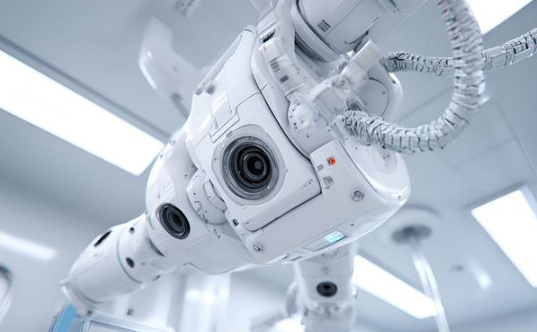
Today, 8K technology is no longer limited to the two major fields of film, television and sports. It is accelerating its penetration into many industries such as telemedicine, industrial quality inspection and security monitoring, promoting these industries to achieve technological upgrading and efficiency improvement.
In the medical industry, the transformation brought by 8K technology can be described as subversive. In the past, surgeons could only rely on traditional imaging technology to understand the internal situation of patients before surgery, but these technologies often had the problem of insufficient clarity. Taking the widely used X-ray technology in the last century as an example, the images generated by it were difficult to clearly show the fine internal structure of the human body, and doctors were prone to misjudgment during diagnosis, which affected the surgical effect.
With the in-depth integration of 8K UHD technology with AI, 3D stereoscopic imaging and other technologies, this situation has been completely changed. Through 8K technology, doctors can clearly observe the dynamic changes of microvessels in the human body, and even distinguish fine nerves and blood vessels. This makes many microscopic surgeries that were previously impossible to carry out due to high risks become possible, greatly improving the success rate and safety of surgeries.
In addition, the high-quality data provided by 8K panoramic real-shot technology also provides strong support for the application of AI technology in the medical field. In telemedicine, 8K technology can realize high-definition image transmission, allowing off-site experts to make diagnoses and guidance as if they were on the scene, bringing benefits to patients in areas with insufficient medical resources.
Although 8K technology has broad application prospects in various fields, its development is seriously restricted by storage problems. In the production process of 8K content, operations such as panoramic shooting, multi-camera synchronous recording and long-term continuous storage put extremely high requirements on the performance of storage devices.
Traditional storage devices often have a series of problems when facing these needs. For example, when continuously writing high-bit-rate 8K data, traditional storage devices are prone to frame dropping, resulting in incoherent video images; at the same time, the high-load working state will cause the device temperature to rise sharply, causing overheating problems, and in severe cases, it may even cause the device to shut down and interrupt the recording work; in addition, long-term high-load operation will also accelerate the wear of storage devices and shorten their service life.
The existence of these problems makes it difficult for 8K technology to be applied on a large scale in more scenarios, and the storage bottleneck has become a key factor hindering the further development of 8K technology.
Storage Demand Surges in the 8K Era, Traditional Solutions Are Unsustainable
A practical case in the medical industry fully illustrates the strict requirements of 8K technology for storage devices. A medical team in Japan cooperated with NHK Technical Research Institute to apply 8K technology to endoscopic cameras. During the operation, doctors can clearly see the tiny blood vessels and sutures in the patient’s body through the 8K endoscope, which greatly improves the accuracy and safety of minimally invasive surgery.
But at the same time, the sharp increase in data volume has also brought huge pressure to storage. The number of pixels of 8K endoscopic cameras is 16 times that of traditional 2K devices, which means that within the same time, the amount of data generated by it is 16 times that of 2K devices. During the operation, data needs to be transmitted and stored in real time. Once there is a delay, it may affect the doctor’s judgment and operation, and then pose a threat to the patient’s life safety.
From this case, we can clearly realize that to achieve large-scale landing of 8K technology, we must break through the key bottleneck of storage. Especially in scenarios that require continuous writing of high-bit-rate data, the traditional general storage architecture can no longer meet the needs. These scenarios have extremely high requirements on the capacity, bandwidth, read and write speed and durability of storage devices, and traditional storage devices have obvious deficiencies in these aspects.
In-depth analysis of the reasons why traditional storage devices cannot meet 8K needs mainly includes two aspects. On the one hand, the amount of data generated by 8K technology has grown explosively. Under 8K resolution, the number of pixels of a single frame image is about 33 million, and the amount of data per second can reach 1GB without compression. Even if advanced encoding technology is used for compression, the bit rate of 8K video will still remain above 400Mbps. If you want to record 20 minutes of uncompressed 8K video, the required storage capacity is as high as 4TB. Such a huge amount of data is a huge test for the capacity and bandwidth of storage devices.
On the other hand, the high-bit-rate continuous writing mode required by 8K technology poses a serious threat to the life of storage devices. The common TLC SSDs on the market currently have a rapid performance decline when continuously writing high-bit-rate data. When the device’s cache is full, the TLC SSD will enter the direct writing mode, and the writing speed will be greatly reduced at this time, which cannot meet the writing demand of 8K video, resulting in video frame dropping.
At the same time, continuous high-load writing will increase the device temperature and trigger the protection mechanism, which may cause the device to shut down. In addition, high-load writing will also accelerate the wear of flash memory cells and shorten the service life of the device. When the capacity of the storage device is close to full load, the cache space will be further reduced, and the performance fluctuation will be more obvious. These problemsmake traditional TLC SSDs unable to adapt to the needs of scenarios such as 8K panoramic video recording.
We can compare the terminal device in the 8K panoramic video recording scenario to a high-speed machine, which needs to transmit data to the storage device at an extremely high speed. For example, to support video recording of 8K 60fps RAW format, the bit stream requirement for the storage device is extremely high. However, ordinary TLC SSDs rely on dynamic SLC caching strategies and cannot cope with this high-load work at all, and are prone to various problems.
To meet the needs of 8K 60fps RAW-level continuous video recording, storage devices must have excellent performance and durability. Specifically, the read and write speed of the storage device needs to reach more than 5000MB/s, and the total write life should exceed 40PB (40,000TBW). Only in this way can we ensure that the storage device can operate stably in complex 8K video recording scenarios. However, the current general storage solutions cannot meet these requirements at all and cannot provide strong support for the development of 8K technology.
Longsys Innovates PTM Mode to Create Customized 8K Storage Solutions
Faced with the storage dilemma faced by the development of 8K technology, many storage manufacturers have increased their R&D efforts to seek breakthroughs. In this process, customized storage technology centered on pSLC mode has gradually become the key to solving 8K storage problems.
As a leading enterprise in the storage field, Longsys, relying on its forward-looking strategic vision and strong technical R&D capabilities, took the lead in launching a customized storage solution based on the PTM mode, providing strong support for the application of 8K technology.
Before launching the solution, Longsys conducted a large number of market research and technical verification work. Through in-depth communication with customers in different fields such as scientific research institutions, industrial enterprises and film and television production companies, Longsys fully understood their specific needs for storage devices in 8K application scenarios.
These customers generally reported that in scenarios such as scientific research high-speed photography, industrial testing and high-end film and television creation, storage devices need to have the characteristics of high performance, high stability and long service life. Based on these needs, Longsys determined the R&D direction and was committed to creating a storage solution that can meet the needs of scenarios such as 8K panoramic video recording.
Longsys’ PTM mode is an innovative storage product technology manufacturing mode, which is essentially different from the traditional general storage product production mode. Under the PTM mode, Longsys can carry out all-round customization from hardware form to firmware algorithm according to the specific needs of customers.
For example, design the appropriate size of the storage device according to the size of the customer’s device body space; match the corresponding interface type according to the customer’s device interface specifications; develop a customized firmware program according to the customer’s firmware logic requirements; at the same time, it can also conduct strict testing on the storage device according to the customer’s test process standards to ensure that the device can meet the customer’s actual application needs.
This customized mode enables the storage device to perfectly match the customer’s terminal equipment and application scenarios, realizing “plug-and-play”, which greatly improves the use efficiency and stability of the device.
In the R&D of SSDs for 8K panoramic video recording scenarios, Longsys gave full play to the advantages of the PTM mode and launched a set of high-performance customized storage solutions. The core of this solution is the adoption of full-capacity pSLC mode, and through this technological innovation, the storage performance has been greatly improved.
In terms of performance, the sequential read and write speed of the SSD under this solution can stably reach more than 5000MB/s, and this high-speed read and write capability can be maintained in the entire disk range. Regardless of the length of recording time and the amount of data, the storage device can continuously write data at a high speed, effectively avoiding the occurrence of video frame dropping and freezing, and ensuring the recording quality of 8K video.
In terms of service life, the total write capacity (TBW) of this SSD reaches 42,000TB, which is far more than that of ordinary TLC SSDs. The total write capacity of ordinary TLC SSDs is usually within a few thousand TB, while the total write capacity of Longsys’ customized SSDs is several times or even dozens of times that of ordinary TLC SSDs. This means that in high-intensity 8K video recording scenarios, Longsys’ customized SSDs can have a longer service life, greatly reducing the customer’s equipment replacement cost.
In terms of energy consumption and heat dissipation, Longsys has optimized the SLC writing mechanism, effectively reducing the power consumption of the storage device. At the same time, the optimized heat dissipation design enables the device to maintain a low temperature during high-load operation, avoiding device performance degradation or shutdown caused by overheating. This allows the storage device to operate stably for a long time, meeting the requirements of 8K panoramic video recording and other scenarios for the continuous working time of the device.
Longsys’ set of customized storage solutions not only meets the basic needs of customers in 8K panoramic video recording scenarios, but also brings customers an experience that exceeds expectations. In practical applications, the high-speed camera developed by Longsys in cooperation with customers has 4 million pixels and a maximum frame rate of 7000fps, and can output 8-bit to 12-bit RAW signals through a 10GbE interface.
In the 8K panoramic stitching scenario, the camera needs to be connected to a high-speed large-capacity SSD for continuous video recording. Longsys’ customized SSD perfectly meets this demand, ensuring that the high-speed camera can work stably and efficiently. In addition, this solution is also widely used in scientific research-level high-speed photography, industrial testing, film and television special effects production and other fields, providing strong storage support for the technological development of these fields.
Longsys’ PTM mode also has the characteristics of flexibility and scalability, which enables its storage solutions to adapt to the development needs of 8K technology in the future. With the continuous progress of technology, 8K technology may develop towards higher resolution, higher frame rate and longer recording time in the future, which will put forward higher requirements for storage devices.
The storage technologies and products developed by Longsys based on the PTM mode can quickly respond to these new needs. Through technological iteration and program optimization, it can launch customized storage products that meet the needs of the new generation of 8K technology. This flexible and scalable capability enables Longsys to always maintain a leading position in the 8K storage field and provide a reliable guarantee for the continuous development of UHD image technology.
The development of 8K technology is not only a revolution at the visual level, but also a reshaping of the entire technology ecosystem. As a key link in the 8K technology ecosystem, the development level of storage technology directly determines the application depth and breadth of 8K technology in various industries.
Through the innovative PTM mode and customized storage solutions, Longsys has broken the storage bottleneck faced by the current development of 8K technology, and laid a solid foundation for the large-scale application of 8K technology in medical care, industry, security, film and television and other fields.
Longsys’ exploration and practice not only provides an effective solution for solving the current 8K storage problem, but more importantly, it points out the direction for the development of ultra-high-definition image technology in the future. By defining the storage standards for ultra-high-definition image applications, Longsys will promote the development of the entire ultra-high-definition image industry chain and provide strong support for the digital transformation of thousands of industries.
In the near future, with the continuous popularization of 8K technology and the continuous progress of storage technology, the ultimate visual experience of “what you see is what you get” will become the norm, bringing more convenience and surprises to people’s lives and work.
Post time: Aug-25-2025