

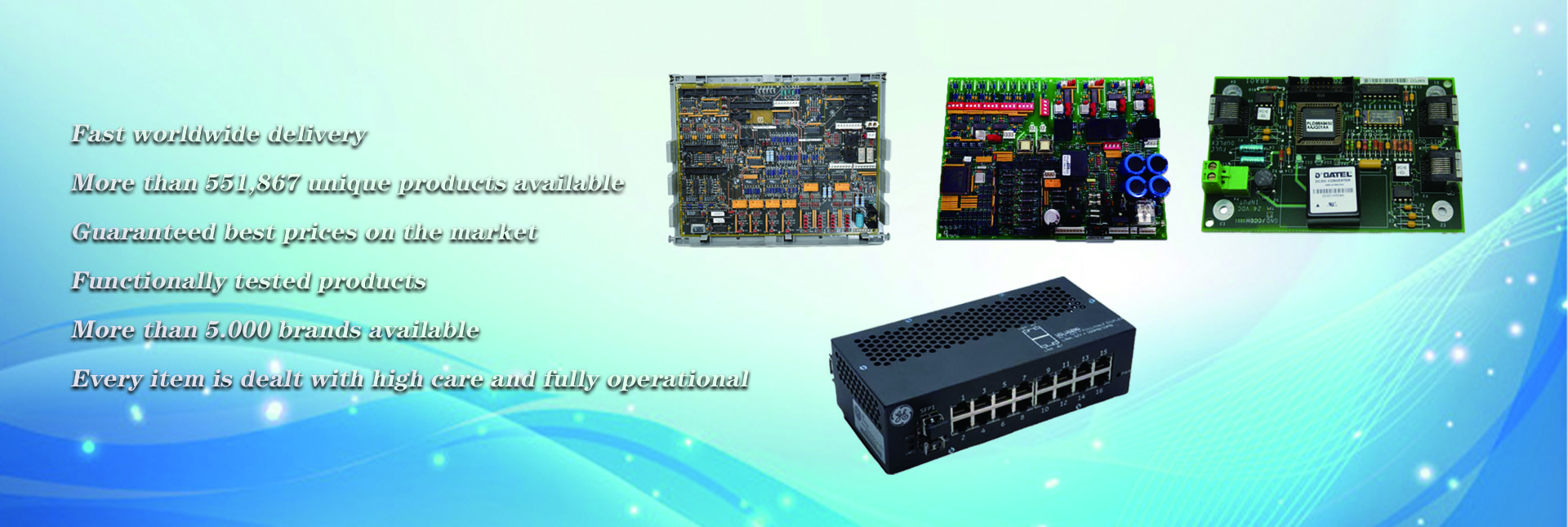
PLC modules form the central processing and coordination hub within distributed control cabinets for mining equipment, managing critical signal exchange between ruggedized field sensors, high-power drive actuators, and centralized monitoring stations often located kilometers away from the active mining face. These industrial-grade control components are engineered to endure the extreme environmental stresses inherent to mining operations, including pervasive dust and particulate infiltration, constant vibration from drilling and hauling activities, wide ambient temperature swings, and exposure to corrosive moisture in underground applications.
The distributed cabinet architecture, built around these modules, localizes control intelligence close to the equipment—such as longwall shearers, continuous miners, conveyor drives, or hydraulic roof supports—while maintaining seamless communication back to the surface control room. This design reduces the length of vulnerable analog signal runs, minimizes electrical interference, and enables faster local response to operational events, all of which are crucial for safety and productivity in remote, challenging mining environments.
Harsh Environment Signal Acquisition and Conditioning
Specially hardened input modules connect directly to sensors monitoring equipment health and operational parameters. These include vibration sensors on gearboxes, pressure transducers in hydraulic systems, temperature sensors on motor windings, and position encoders on cutter heads or conveyor belts. These modules incorporate advanced signal conditioning circuits with high common-mode noise rejection to filter out the intense electrical interference generated by high-power motor starters, variable frequency drives, and welding equipment commonly used in mines.
Each channel is designed for high immunity to ground potential differences that can occur over long distances in mining power grids. They convert often weak and noisy sensor signals from the field into clean, reliable digital data for the control system. The modules continuously perform diagnostic checks, such as monitoring for signal wire breakage (open circuit) or short circuits, immediately flagging any fault that could lead to incorrect data and potentially unsafe automated decisions. This local signal processing at the cabinet level ensures that only validated, high-integrity information is transmitted over the network to the central controller.
Localized Logic Execution and Actuator Drive Control
Processing and output modules within the cabinet execute pre-programmed control logic with deterministic, millisecond-level response times. This local processing is vital for time-critical safety and protection functions. For instance, upon receiving a signal indicating excessive vibration from a conveyor bearing, the local module can immediately command a slowdown or stop of that conveyor section without waiting for a round-trip signal to the surface control room, preventing catastrophic bearing failure and subsequent production downtime.
Output modules deliver precisely controlled power to actuators. They manage the switching of high-current contactors for motors, the proportional control of hydraulic valves for steering and cutting functions, and the sequencing of braking systems. These modules often include built-in protection features like short-circuit detection and overload monitoring on each output channel, safeguarding both the module itself and the connected field device. In applications like automated longwall shearers, these modules coordinate complex sequences of cutting, haulage, and roof support advance, maintaining precise synchronization between multiple moving parts based on real-time sensor feedback.
Network Communication and Remote Diagnostics Interface
Robust communication modules serve as the gateway between the local control cabinet and the wider mine-wide network, often using industrial Ethernet or specialized mining protocols designed for high noise immunity. They handle the reliable transmission of processed operational data, alarm statuses, and equipment health information to the surface, while receiving setpoint changes, mode selections, and start/stop commands from operators.
These modules implement advanced networking features like ring topology support with rapid redundancy (e.g., MRP) to ensure network resilience. If a communication cable is damaged—a common occurrence in a dynamic mining environment—the network can reconfigure within milliseconds to maintain data flow, avoiding a loss of control over critical equipment. Furthermore, they enable secure remote access for maintenance engineers to connect to the cabinet’s PLC from the surface workshop. This allows for remote diagnostics, online monitoring of system variables, and even program updates or troubleshooting without the need for personnel to travel to the often hazardous and difficult-to-access equipment location, significantly improving maintenance efficiency and reducing exposure to risks.
The modular nature of this system allows for straightforward scalability and adaptation. As mining methods evolve or new equipment is added, additional I/O or special function modules can be integrated into the cabinet framework. This future-proofs the control investment and ensures the distributed control system can meet the evolving operational demands of the modern mine throughout its lifecycle.
Post time: Sep-01-2026