

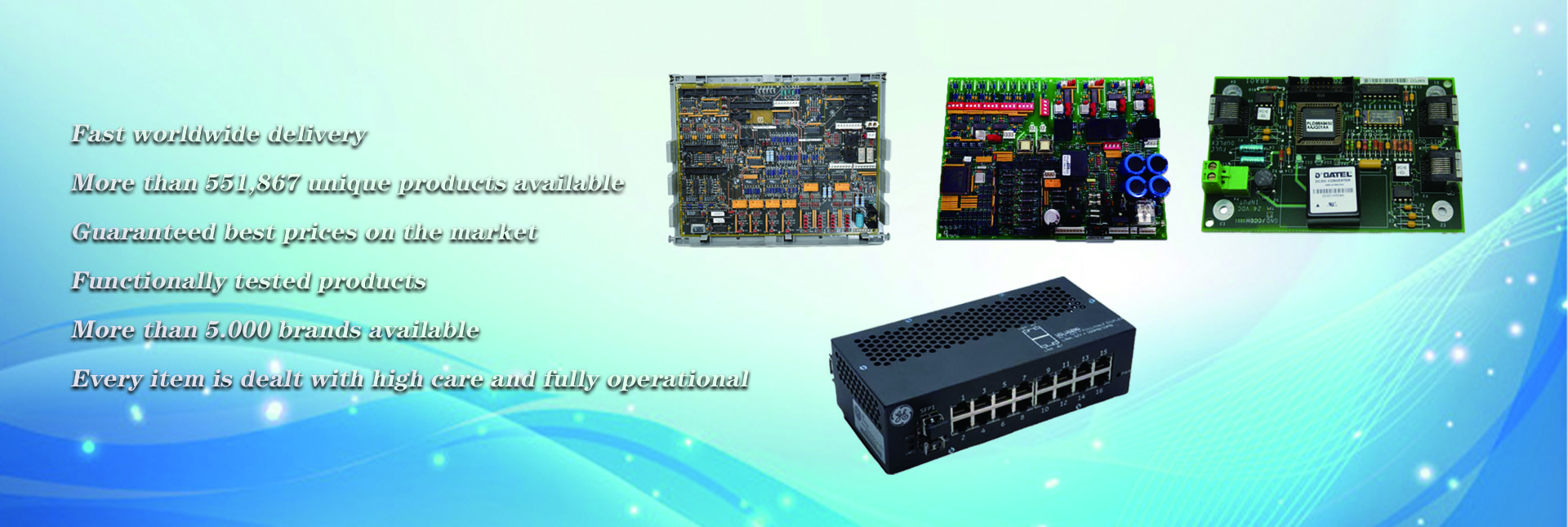
PLC modules form the core control backbone of modern textile production workshop automation systems, delivering reliable, real-time signal processing and logic execution that supports consistent, high-efficiency operation across all types of textile manufacturing workflows. From raw fiber processing to final fabric finishing, these modules handle the complex coordination of motion control, environmental regulation, and production sequence management that directly impacts finished fabric quality, operational safety, and overall line productivity. Their flexible architecture allows engineering teams to adapt control logic quickly as production requirements shift, eliminating the need for extensive rewiring or hardware overhauls when introducing new textile processes.
Real-time motion and synchronization control stands as one of the most critical functions for textile production environments. PLC modules process high-speed pulse signals from positioning encoders and motion detection units to maintain precise speed alignment across multiple interconnected production stations, preventing uneven tension, fabric stretching, or misalignment that can cause defective output during spinning, weaving, or winding operations. This level of synchronized control ensures every section of the production line operates at perfectly matched speeds, even when running at high throughput, reducing material waste and minimizing unplanned line stops caused by motion mismatch errors.
Workshop environmental parameter regulation relies on PLC modules to maintain stable, consistent conditions that are non-negotiable for textile production quality. These modules collect real-time data from temperature, humidity, and air pressure sensors distributed across the workshop, then automatically adjust connected HVAC and air handling equipment to keep all environmental metrics within the exact ranges required for different fiber types and production stages. Stable temperature and humidity levels prevent issues like static fiber buildup, yarn breakage, and fabric dimensional distortion that can happen when workshop conditions fluctuate unexpectedly, creating a steady working environment that supports consistent output quality shift after shift.
Multi-channel signal acquisition and fault feedback processing ensures full visibility into every part of the textile automation system. PLC modules continuously read data from hundreds of distributed signal points across the production line, monitoring the operational status of motors, actuators, and auxiliary equipment in real time. When an abnormal signal is detected, the system triggers targeted fault alerts and executes pre-programmed safety response logic immediately, isolating the affected section of the line without shutting down the entire workshop. This rapid fault detection and response capability cuts down troubleshooting time significantly, reduces the risk of equipment damage, and helps maintenance teams resolve issues before they escalate into extended, costly production downtime.
Seamless integration with existing workshop communication networks allows PLC modules to share real-time production data with centralized monitoring platforms. This connectivity gives production managers full, live visibility into line throughput, defect rates, and equipment runtime across every shift, supporting data-driven decisions that optimize production scheduling, reduce unnecessary energy consumption, and streamline overall workshop operational efficiency. The modular design also makes it easy to expand control capabilities gradually as the textile production scale grows, adding new signal processing and control points without requiring a full replacement of the existing automation infrastructure. Process engineers can update and refine control logic through standard programming workflows, adapting the system to support new fabric types, updated production processes, and evolving operational requirements over the full lifecycle of the workshop.
Post time: Aug-18-2026