
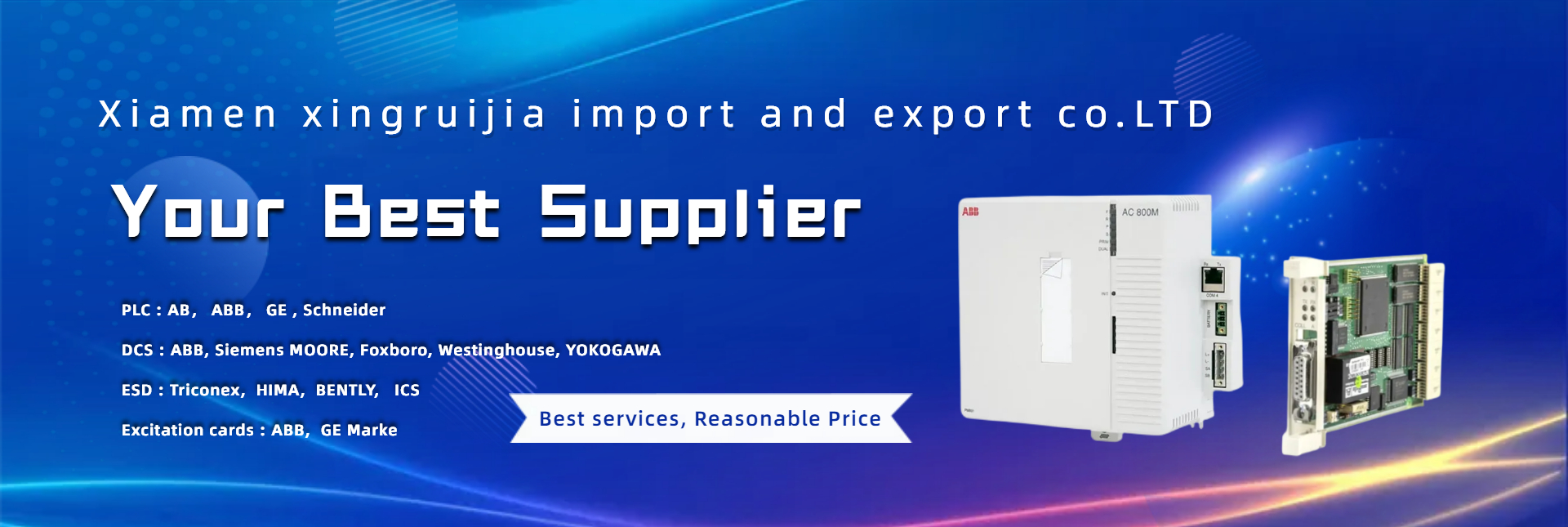

Modular spliced combined PLC systems represent an advanced architectural approach where individual functional modules are physically and logically linked to create a cohesive, high-performance control unit that exceeds the capabilities of a standard monolithic PLC. This design philosophy moves beyond simple rack-based expansion, treating each module—whether for processing, communication, or specialized I/O—as an intelligent building block that can be seamlessly integrated with others to form a custom-tailored control solution. The result is a system where processing power, network connectivity, and I/O density are no longer fixed by a single chassis, but can be scaled and optimized precisely to match the unique demands of complex machinery, multi-process lines, or geographically distributed automation cells.
The core innovation lies in the high-speed, deterministic backplane communication that interconnects these modules. Unlike traditional systems where expansion modules are passive peripherals, in a modular spliced architecture, each module often contains its own dedicated processing element. These processors work in concert, sharing data and synchronizing tasks across a unified memory space with minimal latency. This allows for the distribution of control tasks based on function or locality, enabling parallel processing that dramatically increases overall system throughput and determinism for time-critical applications.
Mechanical and Electrical Integration Architecture
The physical interconnection of modular spliced components relies on robust, precision-engineered coupling mechanisms that ensure both mechanical stability and flawless electrical contact. Connectors are designed with high pin counts to support parallel data buses, dedicated synchronization signals, and substantial power distribution, all within a compact form factor. Keying and polarization features prevent incorrect module assembly, while positive latching mechanisms guarantee a secure connection resistant to vibration and shock, which are common in industrial environments. This mechanical design allows modules to be assembled in various linear or clustered configurations, adapting to the spatial constraints of different machinery.
Electrically, the backplane interface provides more than just power and communication; it establishes a unified system environment. A centralized system management controller, often embedded within a core CPU module, coordinates power-up sequencing, module discovery, and fault management across all connected units. When a new module is added, this controller automatically identifies its type, capabilities, and resource requirements, integrating it into the system’s resource pool. The power distribution network is equally sophisticated, capable of dynamically allocating power based on each module’s real-time demand and implementing staged power-up to avoid inrush current surges that could trip circuit protection devices.
Thermal management is a critical, co-engineered aspect of the design. Heat dissipation is managed at the system level, with modules often designed to share cooling resources. Heat sinks may span multiple modules, and airflow channels are aligned across the spliced assembly to create an efficient thermal pathway. This collaborative approach prevents hot spots and ensures that the performance of processing-intensive modules is not throttled by overheating, maintaining reliability and longevity for the entire combined unit.
Distributed Processing and Functional Specialization
In a modular spliced system, computational tasks are logically partitioned and assigned to the most suitable hardware module. A motion control module, for instance, will house dedicated processors and firmware optimized for executing complex interpolation algorithms and closing high-speed control loops for servo drives. It handles these tasks independently, communicating only target positions, actual positions, and status information with the central logic module. This specialization offloads the main CPU from computationally intensive routines, freeing its resources for sequential logic, data management, and operator interface communication.
Similarly, a communication gateway module might incorporate multiple network processors to manage concurrent protocols like PROFINET, EtherCAT, and OPC UA without burdening the main system bus. This modular approach to functionality allows engineers to select and combine only the capabilities required for a specific application. For a packaging machine, one might splice together a standard logic module, a high-speed counter module for encoder feedback, a motion control module for servo axes, and a dedicated safety module—creating a perfectly optimized controller in a single, compact assembly.
The synchronization between these specialized modules is achieved through hardware-based mechanisms. Dedicated synchronization signals or a precise system-wide clock is distributed across the backplane, allowing events captured by an input module to be time-stamped with microsecond accuracy and ensuring that output commands from multiple modules are executed in perfect coordination. This level of synchronization is essential for multi-axis coordination in robotics or for high-speed registration control in printing and converting equipment, where even microsecond-level jitter can result in product defects.
Configuration, Diagnostics, and System-Wide Cohesion
From a software engineering perspective, a modular spliced combined system is configured and programmed as a single, unified entity. The integrated development environment presents a holistic view of all connected modules, allowing the programmer to define variables, data structures, and program logic that span the entire assembly seamlessly. I/O points on a remote analog module, for instance, are addressed in the logic with the same simplicity as those on the main CPU module. The system handles all underlying data routing and protocol conversion transparently.
Diagnostic capabilities are significantly enhanced in this architecture. Each module continuously performs self-diagnostics and reports its health status into a centralized diagnostic database. The system can correlate events across modules, providing insightful root-cause analysis. For example, it can link a transient communication error on a network module with a simultaneous spike in electrical noise reported by an analog input module, pointing maintenance personnel to a likely source of interference. This system-wide diagnostic view simplifies troubleshooting and enables predictive maintenance strategies.
This cohesive design also future-proofs the control system. As technology evolves or application requirements change, individual modules can be upgraded or replaced without redesigning the entire control platform. A newer, faster CPU module can be spliced into the existing assembly, leveraging the same specialized I/O and communication modules. This modularity protects initial investments in specialized hardware and allows for incremental technological adoption, ensuring that the control system remains at the forefront of performance and capability throughout the long service life typical of industrial assets.
Post time: Jul-15-2026