Welcome to our websites!

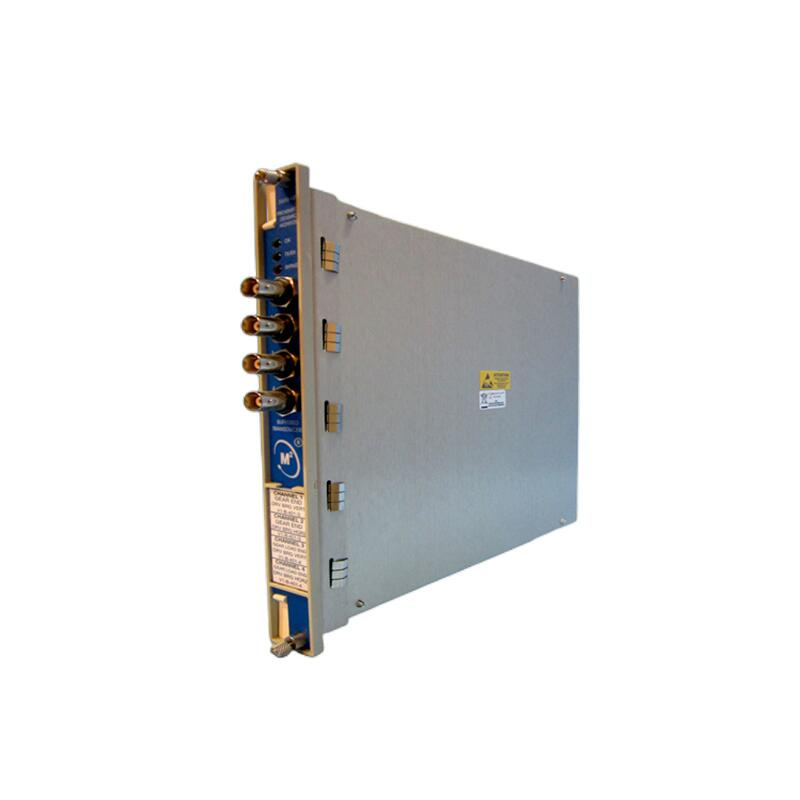
BENTLY NEVADA 3500-42 Key Module
BENTLY NEVADA 3500-42
1. Product Overview
BENTLY NEVADA 3500-42 (commonly abbreviated as 3500/42) is a critical module in the Bently Nevada 3500 Series Asset Monitoring System. This module is mainly used to monitor displacement, vibration and acceleration of large rotating machinery, including generators, steam turbines, compressors, pumps and other similar equipment. It ranks among the core sensors for Industrial Asset Integrity Management (IAM).
______________________________________________________________________________________________
2. Core Parameters and Technical Specifications
|
Parameter
|
Specification
|
|---|---|
|
Model
|
3500/42 (some variants are marked as 3500/42M)
|
|
Main Functions
|
Displacement (displacement/axial position), vibration and acceleration monitoring
|
|
Output Signals
|
Multiple analog outputs (0-10V, 4-20mA) and digital outputs (dedicated interface)
|
|
Power Supply Voltage
|
24 VDC (typical), wide voltage range of 18-32 VDC supported
|
|
Power Consumption
|
≤ 6W
|
|
Operating Temperature
|
-40°C to +70°C (some modules operate at -20°C to +60°C depending on configuration)
|
|
Weight
|
0.5kg – 1.4kg (varies with specific configuration and enclosure)
|
|
Communication Interface
|
Supports Ethernet, serial port, CAN bus and other protocols, compatible with Emerson fieldbus systems
|
|
Installation Method
|
Equipped with waterproof and dustproof enclosure, can be installed inside or outside the equipment, suitable for various industrial environments
|
______________________________________________________________________________________________
3. Product Features and Advantages
High Precision and Real-Time Performance: Adopting advanced sensor technology and signal processing algorithms, it can capture extremely subtle vibration changes and provide real-time equipment status data.
High Reliability: Sturdily designed with redundancy mechanism and industrial-grade components, it can operate stably for a long time in harsh environments with high temperature, humidity and severe vibration.
Multifunctional Integration: In addition to vibration monitoring, it also integrates displacement and acceleration monitoring functions, enabling comprehensive evaluation of mechanical operating conditions.
Easy Integration: Supports multiple communication modes including Ethernet, serial port and CAN bus, allowing seamless connection to Emerson’s PlantWeb Insight platform or other monitoring systems for unified data management.
Wide Application: Suitable for high-demand industries such as power generation, petrochemical, aerospace, metallurgy and mining.
______________________________________________________________________________________________
4. Structure and Components
The 3500/42 module generally consists of the following core components:
Sensor Element: The core component used to detect displacement, vibration or acceleration signals.
Signal Conditioning Circuit: Amplifies, filters and converts weak sensing signals into standard output signals.
Protective Enclosure: Industrial-grade protective enclosure (IP54/IP65) that protects internal circuits from dust, moisture and mechanical impact.
Installation Accessories: Including flanges, bolts, gaskets, cable connectors and other matching parts.
______________________________________________________________________________________________
5. Typical Application Areas
Power Plants: Monitors vibration and displacement of steam turbine and generator shafts, preventing mechanical resonance and axial impact.
Petrochemical Industry: Tracks the operating status of compressors and pumps, preventing equipment failures caused by excessive vibration.
Aerospace: Collects high-precision status data of engines or transmission systems.
Other Industries: Paper making, metallurgy, mining machinery and other fields requiring high-reliability condition monitoring.
______________________________________________________________________________________________
6. Installation and Maintenance Recommendations
Installation Location Selection
Ensure the sensor can accurately capture key vibration points of the equipment under test, such as bearing seats and machine bases.
Avoid installation in areas with strong magnetic fields or excessive interference to prevent signal accuracy degradation.
Electrical Connection
Ensure stable power supply voltage; a dedicated regulated power supply is recommended.
Connect output signal lines to the master station (such as 3500 mainframe or DCS system) via standardized wiring.
Routine Maintenance
Regularly inspect the enclosure seal to prevent moisture intrusion.
Check wiring terminals for looseness or corrosion.
Perform annual calibration in accordance with the product manual to keep measurement accuracy up to standard.
————————————————————————————————————-
If you would like to learn more about our products and services, please feel free to contact us at any time!
- Sales Manager : Jinny
- Email : sales5@xrjdcs.com
- Whatsapp/Mobile:+86 15359273791
Global renowned brand cooperation
ABB 丨 GE 丨Allen Bradley 丨 Honeywell 丨 Emerson 丨 Bently Nevada 丨 Westinghouse
Triconex 丨 Foxboro 丨 ICS Triplex 丨 Hima 丨 Schneider 丨 Yokogawa 丨 Woodward
—————————————————————————————
Why Partner With Us?
Why Choose Our Company?
- Authorized Distributor of Top Global Brands We supply genuine parts and equipment from world-leading manufacturers, such as A-B, ABB, GE, TRICONEX, BENTLY, EMERSON and other reputable brands.
- Superior Product Quality & Round-the-Clock Support Count on reliable, high-performance products and non-stop online assistance—we are available 24 hours a day, 7 days a week to solve your problems.
- Affordable Pricing & Speedy Delivery Get budget-friendly quotes without compromising quality, plus short turnaround times and on-time shipping for every order.
- Extensive In-Stock Inventory & Direct Factory Sourcing Benefit from a large, ready-to-ship stock and direct factory partnerships, cutting out middlemen and securing stable supply.
- Worldwide Express Delivery Safe and fast global shipping via premium couriers, including DHL, UPS, FedEx and TNT, delivering goods to your door across the globe.
Our Comprehensive Services
- Sales Team 24/7 dedicated service available all year round. We respond quickly, listen patiently and handle all your PLC and DCS product inquiries professionally and efficiently.
- Engineering & Quality Control Team Full-scale quality inspections are carried out for every product before delivery, ensuring zero defects and reliable operation for all items.
- Finance Team Efficient, transparent payment processing and prompt refund verification, keeping transactions smooth and secure.
- Warehouse & Logistics Team Strict order verification, careful and sturdy packaging, and timely dispatch to make sure your order arrives safely and on schedule.
- After-Sales Support Team A full-time professional after-sales team, working closely with the sales department to deliver fast, responsive and personalized after-sales care for all clients.
Write your message here and send it to us