Welcome to our websites!



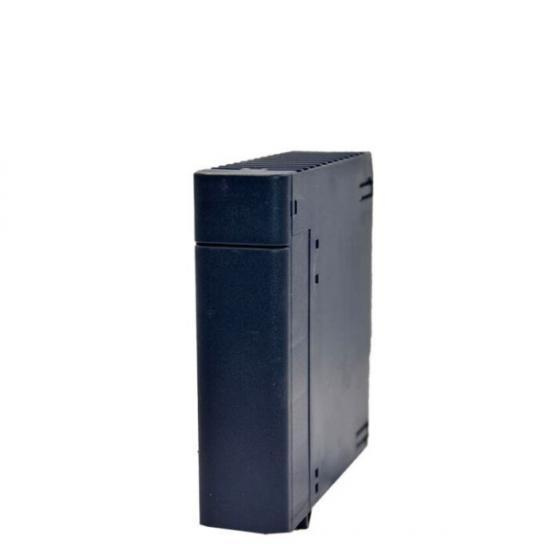
GE IC694ACC310A Input/Output Combination Module
GE IC694ACC310A
GE IC694ACC310A is a high-performance analog input/output combination module, which belongs to the powerful PACSystems RX3i series Programmable Automation Controller (PAC) product line under General Electric (GE). This module plays a key role as a “two-way signal gateway” in automation systems. It integrates high-precision analog acquisition and output functions into a single module, greatly saving rack space and simplifying system configuration. GE IC694ACC310A can simultaneously process analog input signals from on-site sensors (such as temperature, pressure, flow) and send control signals to actuators (such as control valves, frequency converters), realizing the close integration of monitoring and control. Its core value lies in providing excellent inter-channel isolation, high-resolution conversion, and strong anti-interference ability. This ensures that in complex industrial electromagnetic environments, data acquisition is accurate and error-free, and the output of control commands is stable and reliable, providing strong hardware support for achieving precise process control and efficient equipment management.
Product Parameters
- Product Model: IC694ACC310A
- Manufacturer: General Electric (GE)
- Product Type: Analog Combination Module (4-point Input / 2-point Output)
Input Section
- Number of Input Points: 4 points (differential input)
- Input Type: Voltage: ±10 VDC; Current: 0-20 mA, 4-20 mA (software selectable)
- Resolution: 16 bits (including sign bit)
- Accuracy (Typical Value): ±0.1% of full scale
Output Section
- Number of Output Points: 2 points
- Output Type: Voltage: ±10 VDC; Current: 0-20 mA, 4-20 mA (software selectable)
- Resolution: 16 bits
- Accuracy (Typical Value): ±0.1% of full scale
General Specifications
- Isolation: Inter-channel isolation, isolation between channels and backplane
- Backplane Connection: Communicates with CPU through RX3i backplane
- Power Consumption: 5V backplane current: 130 mA max
- Operating Temperature: 0°C to +60°C
- Installation Method: Modular, inserted into RX3i series PAC rack
Structure and Composition
GE IC694ACC310A adopts a compact modular design. Its robust housing is equipped with two rows of LED status indicators on the front, which are used to display the module status, power supply, and the activity or fault status of each input/output channel. Inside the module, there are clearly divided electrical and physical processing areas for input and output.
The input side includes 4 independent signal conditioning circuits and a 16-bit Analog-to-Digital Converter (ADC). Each channel is equipped with filtering and protection circuits to process weak millivolt or milliamp signals from sensors. The output side includes 2 independent 16-bit Digital-to-Analog Converters (DAC) and output drive circuits to generate precise voltage or current control signals.
Key isolation circuits provide electrical isolation between input channels, output channels, and backplane logic, effectively preventing ground loops and high-voltage transients from damaging the module or backplane. The module is closely connected to the RX3i backplane through the connector at the rear, enabling high-speed data exchange and power acquisition.
Key Features and Advantages
High-Density Integration and Space Saving
GE IC694ACC310A integrates 4 channels of analog input and 2 channels of analog output into a single module. Compared with using independent input and output modules, it significantly reduces the number of slots occupied in the RX3i rack, lowers hardware costs, and simplifies wiring. It is especially suitable for control cabinets with limited space and applications requiring compact design.
Excellent Accuracy and Flexibility
This module provides 16-bit high resolution and accuracy better than ±0.1%, ensuring the accuracy of process monitoring and control output. The type (voltage/current) of each channel can be independently configured through programming software (such as Machine Edition) without jumpers. This provides unparalleled flexibility, allowing users to quickly adjust according to the type of on-site sensors and actuators, and reducing the types of spare parts inventory.
Strong Isolation and Reliability
Comprehensive isolation between channels and between channels and the backplane is its core advantage. This design effectively suppresses noise interference, prevents faults from spreading between channels, and protects the expensive CPU and backplane from damage caused by high voltage on the field side, greatly enhancing the overall stability and reliability of the system in harsh industrial environments.
Application Fields
GE IC694ACC310A is widely used in complex process industries that require simultaneous analog monitoring and control. In the chemical industry, it is used to read the temperature and pressure of reactors (input) and control the speed of cooling water valves and feed pumps (output). In the water treatment field, it monitors pH value and flow rate (input) and adjusts chemical dosing pumps and sewage valves (output). In the food and beverage industry, it is used for proportioning control, reading flow and density signals (input), and controlling raw material valves (output). In addition, IC694ACC310A is an ideal choice in pharmaceuticals, oil and gas, building automation, and any other applications that require precise closed-loop control.
Installation and Maintenance
Pre-Installation Preparation
Before installing GE IC694ACC310A, ensure that the power supply of the RX3i system is completely turned off. Confirm that the module model matches the application requirements. Plan the wiring method (voltage type or current type, two-wire or four-wire) according to the type of sensors and actuators. Use shielded twisted-pair wires and ensure that the shield layer is grounded at a single end on the control cabinet side to minimize noise interference.
Maintenance Recommendations
Daily maintenance mainly includes regularly checking whether the module status indicators are normal. Regularly use a calibrator to verify the input and output accuracy of key channels to ensure that the measured values and control outputs are within the allowable error range. If a channel fault occurs, first check the on-site wiring, sensors, and actuators, and use the LED indicators of the module and the diagnostic function of the programming software for troubleshooting. When cleaning, use dry compressed air to remove surface dust.
————————————————————————————————————-

If you would like to learn more about our products and services, please feel free to contact us at any time!
- Sales Manager : Jinny
- Email : sales5@xrjdcs.com
- Whatsapp/Mobile:+86 15359273791
Global renowned brand cooperation
ABB 丨 GE 丨Allen Bradley 丨 Honeywell 丨 Emerson 丨 Bently Nevada 丨 Westinghouse
Triconex 丨 Foxboro 丨 ICS Triplex 丨 Hima 丨 Schneider 丨 Yokogawa 丨 Woodward
—————————————————————————————
Core Product Range
Control & Signal Modules
- Central Control Units: PLC, DCS, CPU modules
- Interface & Communication Modules: Input/Output (AI/AO/DI/DO) modules, fiber optic interface boards, communication modules
- Functional Boards & Cards: I/O boards, counting boards, data acquisition cards, gas turbine cards, FIM cards, embedded cards
Drive & Peripheral Equipment
- Servo drives, servo motors
- Industrial displays, industrial keyboards
- Controllers, encoders, regulators, sensors
Power & Connection Components
- Power modules, thyristor modules, terminal modules
- Wires, cables, power modules, control modules
Our Competitive Advantages
- Industry Expertise & Inventory Strength: With long-term experience in the industrial control sector, we maintain a large stock of in-demand products to ensure fast delivery.
- Leading Market Position: We stand out with competitive pricing and strict quality control, guaranteeing reliable performance of all products.
- Comprehensive Product Coverage: Beyond standard models, we also supply rare and discontinued automation parts, meeting diverse customer needs.
- Assured After-Sales Service: Any product with quality issues can be replaced free of charge within 15 days of purchase, providing peace of mind for your operations.
Applicable Industries
Our automation spare parts are widely used in key sectors including:
Iron & steel, hydropower, nuclear power, power generation, glass manufacturing, tire factories, rubber production, thermal power generation, papermaking, shipping, navigation, and more.
Iron & steel, hydropower, nuclear power, power generation, glass manufacturing, tire factories, rubber production, thermal power generation, papermaking, shipping, navigation, and more.

Write your message here and send it to us