Product Overview
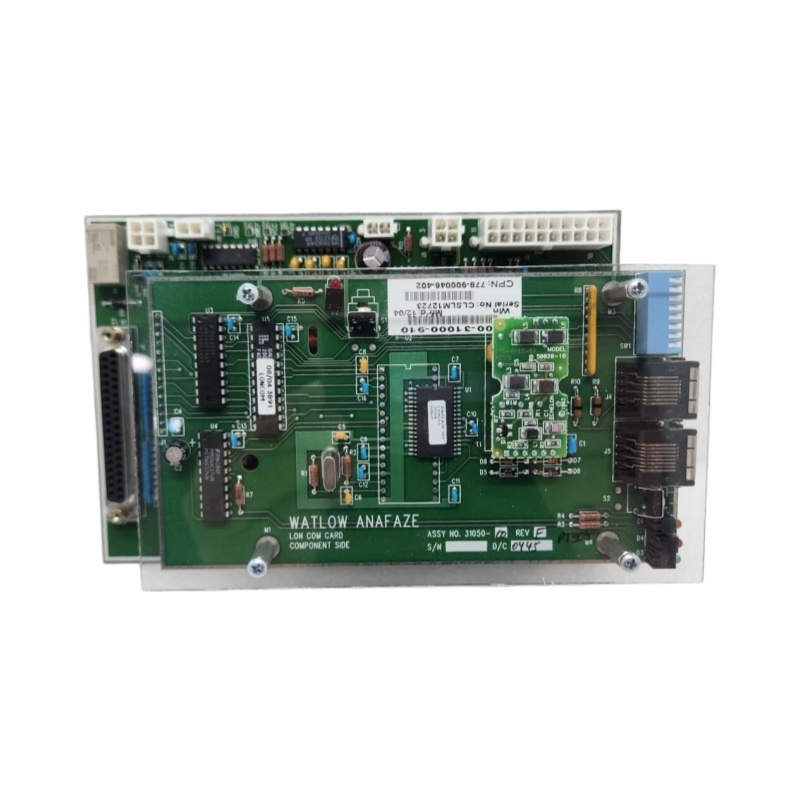
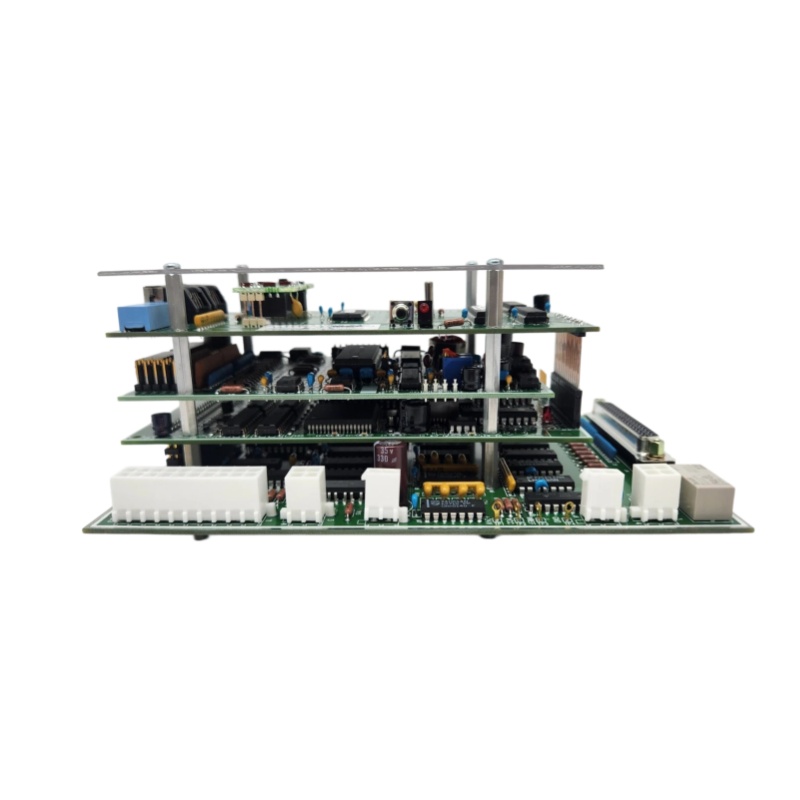
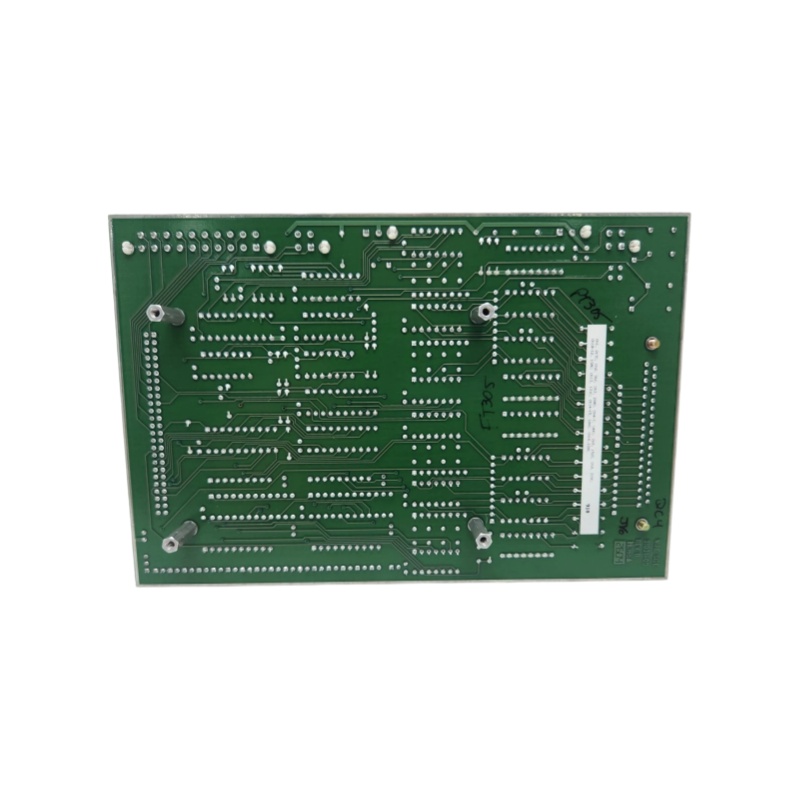
The Lam Research 778-900046-402 is a high-performance core component module of radio frequency (RF) impedance matching network, specially designed for semiconductor plasma etching and deposition equipment. Deployed in Lam Research etching tools, this component serves as a critical adaptive bridge connecting the RF generator and the plasma load of the process chamber. Its core function is to achieve precise conjugate matching between the output impedance of the RF generator and the dynamically changing plasma impedance inside the chamber by dynamically adjusting the internal capacitance or inductance matrix.
Rather than a simple passive component, the 778-900046-402 is an intelligent subsystem integrated with high-power vacuum capacitors, precision stepping drive motors, high-accuracy current/voltage sensors, and fast-response control logic. It minimizes the reflected power of the RF transmission link, ensuring that most RF energy is utilized to dissociate process gases and generate high-density plasma. This directly determines the etching rate, uniformity, and verticality of the microscopic profile on the wafer surface.
As part of Lam Research’s highly integrated spare parts system, this model is engineered to deliver low parasitic parameters, high Q-factor, and long-term stability under high-frequency and high-voltage operating conditions. Adopting high dielectric strength ceramic substrates, vacuum sealing technology, and low-loss silver-plated copper conductor structure, the Lam Research 778-900046-402 maintains extremely low self-heating and excellent heat dissipation performance under high-power RF operating conditions of tens of kilowatts.
Product Specifications
|
Parameter Name
|
Parameter Value
|
|
Product Model
|
Lam Research 778-900046-402
|
|
Manufacturer
|
Lam Research
|
|
Product Type
|
Core component of RF impedance matching network (matching capacitor/sensor module)
|
|
Applicable Frequency Range
|
2 MHz / 13.56 MHz / 27.12 MHz / 60 MHz (wideband adaptation)
|
|
Maximum RF Power Rating
|
>10 kW (continuous wave, under forced air cooling or water cooling conditions)
|
|
Variable Capacitance Range
|
50 – 1000 pF (typical main matching capacitor, vacuum variable type)
|
|
Capacitance Adjustment Resolution
|
<0.1 pF (corresponding to stepper motor subdivision drive)
|
|
Maximum Operating Voltage
|
>5 kV (peak value)
|
|
RF Current Sensing Accuracy
|
±1% full scale (built-in current transformer)
|
|
RF Voltage Sensing Accuracy
|
±1% full scale (built-in high-voltage divider resistors/capacitors)
|
|
Response Time (Matching Time)
|
<100 ms (typical full-range search and lock time)
|
|
Operating Temperature Range
|
25°C to 85°C (ambient temperature inside the matching box)
|
|
Communication Interface
|
Parallel digital I/O or RS-485/optical fiber (connecting to main ECU)
|
|
Cooling Method
|
Forced air cooling + aluminum heat sink conduction cooling
|
|
Installation Method
|
Horizontal mounting on slides or fixed brackets of matching network chassis
|
Structure and Composition
The internal structure of the Lam Research 778-900046-402 fully integrates RF power electronics and precision mechanical engineering. Encapsulated in an electromagnetic-shielded aluminum alloy housing, the module consists of three core internal units: an execution unit, a sensing unit, and a control interface unit.
As the physical core of the module, the execution unit is equipped with one or more sets of vacuum variable capacitors. These capacitors adopt precision-machined ceramic vacuum tubes as dielectrics, with internal electrodes made of oxygen-free copper or beryllium copper alloy, and are connected to external stepper motors through bellows structures. The stepper motor driver receives pulse commands from the host system and drives the capacitor rotor group to perform ultra-fine rotational or linear displacement via a high-reduction gear or belt transmission mechanism, enabling continuous adjustment of capacitance values.
The sensing unit serves as the perception foundation for the closed-loop operation of the 778-900046-402 and is connected in series with the RF transmission line. It integrates high-permeability toroidal magnetic cores for current induction and temperature-compensated high-voltage divider networks for voltage induction. These sensors acquire the amplitude and phase information of RF signals at a high bandwidth of tens of megahertz.
The control interface unit is responsible for high-speed analog-to-digital conversion (ADC) of analog signals collected by sensors, and conducts data interaction with the host after logical processing. The module substrate adopts high-frequency ceramic composite materials (e.g., Rogers 4350B) to ensure low dielectric loss and excellent high-voltage insulation performance under high-frequency and high-voltage conditions. All internal RF traces follow strict 50-ohm impedance control, and silver-plated large-area ground planes are applied to effectively eliminate RF electromagnetic interference (EMI) to internal sensors and other weak-current signals of the equipment.
Key Features and Advantages
Ultra-fast and High-precision Automatic Matching Capability
Equipped with high-speed response stepper motors and optimized matching search algorithms, the Lam Research 778-900046-402 locates the optimal matching point of plasma loads within milliseconds. This rapid response is critical for next-generation etching technologies that require frequent recipe switching and pulsed processes. It significantly reduces transient process instability caused by excessive reflected power, effectively improving wafer edge etching uniformity (UCI).
Ultra-high Q-factor and Ultra-low Loss
Featuring high-grade vacuum variable capacitors and large-section silver-plated conductor structures, the component achieves an extremely high quality factor (Q-factor) when carrying high-power RF signals. This minimizes thermal loss of RF energy during transmission through the matching network, protecting expensive RF generators and preventing parameter drift of the matching network caused by self-heating. The design maximizes energy transmission efficiency from the RF generator to the chamber plasma load.
Superior Environmental Adaptability and Durability
Semiconductor reaction chambers typically operate in environments with high temperature, strong electromagnetic fields, and chemical corrosion. The module adopts a fully sealed high-strength aluminum alloy housing, with internal electronic components treated by vacuum potting and conformal coating to resist moisture and harmful gas intrusion. The vacuum capacitor’s long-life design and anti-arcing performance enable the module to achieve a mean time between failures (MTBF) far exceeding industry standards, greatly reducing unplanned downtime of fabs caused by matching network failures.
Application Fields
The Lam Research 778-900046-402 is mainly integrated into advanced 300mm wafer etching equipment, acting as a core matching component for the RF transmission systems of Lam Research 2300 series (including Kiyo series dielectric etchers and Flex series conductor etchers) and Versys series metal etchers. Its applications cover anisotropic dielectric etching and metal hard mask opening in logic chip manufacturing, as well as high-aspect-ratio (HAR) contact hole etching and capacitor deep trench etching in memory chip production.
In these processes, the component dynamically matches varying plasma impedance, ensuring stable injection of RF power into the chamber with minimal reflection and enabling precise control of reactive ion energy and flux on the wafer surface. It is also widely applied in compound semiconductors and emerging technologies, including deep trench etching for power devices (e.g., GaN-on-SiC) and silicon deep reactive ion etching (DRIE) for MEMS (Micro-Electro-Mechanical Systems).
The 778-900046-402 effectively solves core process pain points in wafer fabrication, such as process rate drift, aggravated micro-load effects, and equipment self-protection shutdowns triggered by excessive reflected power. It is the preferred component for fab maintenance engineers to evaluate matching network performance and conduct preventive replacement, occupying a pivotal position in the etching process modules of advanced wafer fabs worldwide.
Related Products
- Lam Research 778-900046-401: The previous-generation model with slightly lower parameters, featuring different capacitance adjustment ranges and response speeds, suitable for low-power and legacy etching chambers.
- Lam Research 778-900046-403: An enhanced version of the same series, integrated with higher-precision RF voltage/current sensors and supporting advanced RF harmonic detection functions, tailored for ultra-high-precision etching of FinFET and GAA architectures.
- Lam Research 778-900032-001: A dedicated stepper motor drive board for the matching module, installed on the backplane of the matching box to receive control signals and drive the internal capacitance adjustment motor of the 778-900046-402.
- Lam Research 778-900056-002: An RF filter module for the same RF link, installed in series with the matching component to filter harmonic interference generated during processes and protect the matching network and generator.
- Lam Research 778-900045-100: A heat sink and thermal pad assembly dedicated to water-cooled/air-cooled matching network chassis, supporting long-term thermal management of the 778-900046-402.
- Lam Research 810-312817-001: A low-loss RF coaxial cable connecting the matching component to the reaction chamber feed terminal, serving as the physical power transmission channel for the module.
Installation and Maintenance
Pre-installation Preparation
Before installing the Lam Research 778-900046-402, ensure the main RF generator is powered off and fully discharged, and the total power of the RF matching network chassis is cut off with lockout/tagout (LOTO) procedures implemented. Operators must wear ESD anti-static wristbands and clean the chassis slides and connector interfaces with clean dust-free cloths.
During installation, smoothly insert the module into the chassis backplane slot, ensure the bottom heat sink is fully attached to the chassis heat dissipation backplane (apply thermal grease if necessary), and fasten the screws in the sequence of fixing both ends first (to ensure ground continuity) and then tightening the middle screws. When connecting the RF coaxial cable to the module output terminal, use a special torque wrench and confirm the inner conductor spring pieces are fully inserted without bending or offset.