1. Product Overview
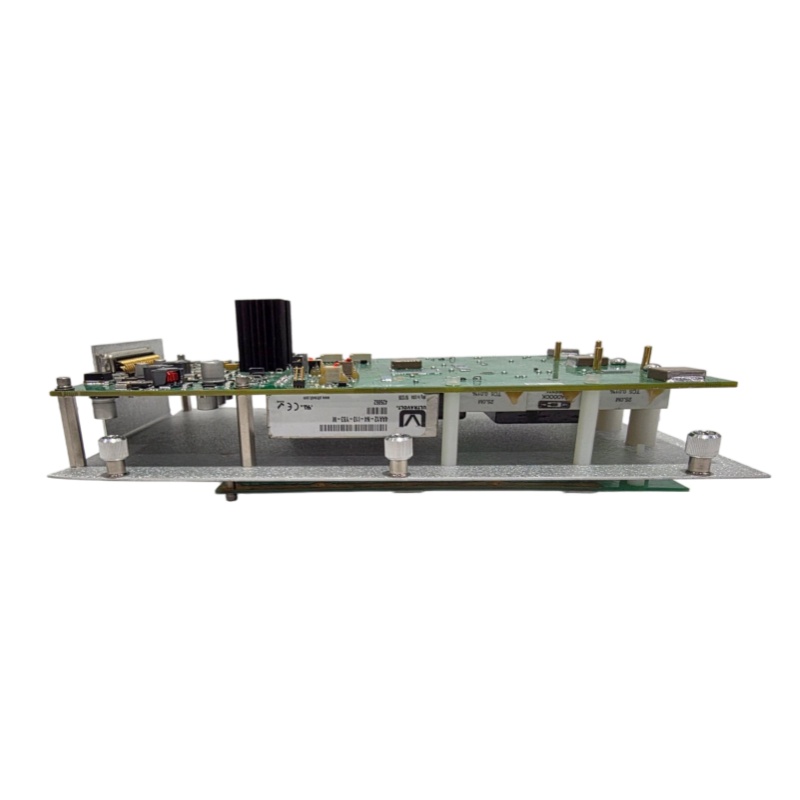
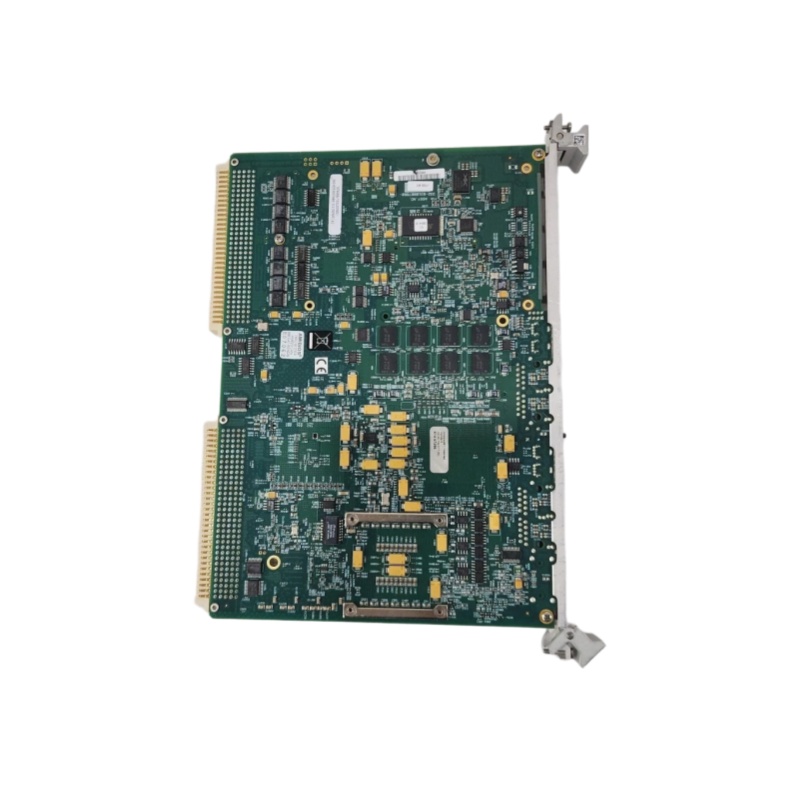
The Lam Research 810-107813-107 is an ultra-high-purity digital Mass Flow Controller (MFC) integrated module specifically designed for the front-end process gas delivery systems of semiconductor plasma etching and deposition equipment. As a core metering and execution component in the Lam Research Gas Panel, this module is tasked with delivering trace amounts of special process gases (typically measured in Standard Cubic Centimeters per Minute, SCCM) to the reaction chamber with ultra-high precision and rapid response speed.
Distinct from standard industrial-grade MFCs, the 810-107813-107 features an ultra-clean electropolished internal flow path. Its sensing element adopts a frictionless suspension design (thermal or pressure-based), integrated with precision laminar flow elements and adiabatic coils. This configuration enables accurate gas mass flow measurement that is immune to inlet temperature and pressure fluctuations. In high-aspect-ratio etching for 3D NAND and atomic-level etching for advanced logic chips, the flow control stability of this component directly determines the chemical reaction rate, etching selectivity, and critical dimension (CD) uniformity on wafer surfaces.
2. Product Specifications
|
Parameter Name
|
Parameter Value
|
|
Product Model
|
Lam Research 810-107813-107
|
|
Manufacturer
|
Lam Research
|
|
Product Type
|
Ultra-high-purity digital Mass Flow Controller (MFC) module
|
|
Applicable Flow Range
|
Typical 10 SCCM ~ 50 SLM (subject to spool configuration)
|
|
Control Accuracy
|
± 0.5% of setpoint (10% ~ 100% of full scale)
|
|
Repeatability
|
± 0.2% of full scale
|
|
Response Time (Setpoint)
|
< 800 ms (within ±2% of final value)
|
|
Applicable Gas Types
|
Corrosive gases (Cl₂, BCl₃, HBr, CF₄, NF₃, etc.) and inert gases
|
|
Valve Body Material
|
Corrosion-resistant stainless steel (316L VAR or Hastelloy C-22)
|
|
Sealing Material
|
All-metal (metal gasket) or high-durability FFKM (Perfluoroelastomer)
|
|
Maximum Inlet Pressure
|
150 psig (approx. 10.3 bar)
|
|
Pressure Drop Range
|
10 ~ 60 psid (subject to specific setpoints)
|
|
Internal Leak Rate
|
< 1.0 × 10⁻⁹ atm·cc/sec (He)
|
|
External Leak Rate
|
< 1.0 × 10⁻¹⁰ atm·cc/sec (He)
|
|
Operating Temperature Range
|
15°C to 50°C (valve body heating up to 120°C available for condensation prevention)
|
|
Communication Protocol
|
DeviceNet™ or RS-485 (digital communication, supports remote setup and diagnosis)
|
|
Cleanliness Class
|
Class 1 assembly environment, double-layer vacuum sealed packaging
|
|
Power Supply Voltage
|
24 VDC ± 10%
|
3. Structure and Composition
The Lam Research 810-107813-107 integrates high-precision microfluidic manufacturing technology and high-reliability intelligent control technology. Physically, the module consists of three core functional areas: flow and sensing zone, control valve actuation zone, and signal processing and communication zone.
The flow and sensing zone serves as the pneumatic core of the module, constructed from an ultra-precision machined special alloy metal block. It incorporates a bypass capillary for mainstream gas shunting and a spiral or straight sensing tube. Heating coils and temperature sensing elements are wrapped around the exterior of the sensing tube, forming a classic thermal mass flow sensing core. When gas flows through the tube, heat is carried away, and the temperature difference signal between upstream and downstream is amplified via a Wheatstone bridge circuit to accurately calculate the real-time gas mass flow rate.
Located at the downstream outlet of the gas flow path, the control valve actuation zone functions as the physical actuator of the module. It integrates a high-dynamic-response electromagnetic proportional regulating valve with a specially designed spool that resists chemical wear in corrosive gas environments and maintains an extremely low deadband.
The signal processing and communication zone acts as the intelligent core of the 810-107813-107, housing a multi-layer high-density Printed Circuit Board (PCB). The PCB is equipped with a high-speed Microcontroller Unit (MCU), high-precision Analog-to-Digital/Digital-to-Analog Converters (ADC/DAC), and isolated communication interface chips. The MCU collects real-time flow sensing signals, calculates output values via built-in PID (Proportional-Integral-Derivative) control algorithms, and precisely drives the proportional solenoid valve to stabilize the target flow. The entire PCB assembly is enclosed in a shield cover on the module upper cover, effectively resisting strong Radio Frequency (RF) electromagnetic field interference near the reaction chamber.
4. Core Features and Advantages
4.1 Ultra-high Precision and Long-term Stability
Leveraging advanced thermal sensing technology and an all-digital closed-loop control algorithm, the Lam Research 810-107813-107 delivers industry-leading setpoint control accuracy across the full flow scale. Its built-in zero-drift compensation technology effectively suppresses flow variations caused by ambient temperature changes and gas composition differences. It maintains minimal flow output drift during continuous operation spanning weeks or months, ensuring high repeatability of wafer process results.
4.2 Ultra-fast Response and Active Flow Compensation
Advanced pulsed plasma processes require synchronous flow pulsing with RF power switching. The module achieves a step response time of less than 800 ms, enabling rapid tracking of recipe flow adjustments. Critically, the integrated DSP monitors inlet pressure fluctuations in real time and drives proactive valve pre-compensation, eliminating downstream flow disturbances induced by upstream gas pressure variations and significantly improving transient process stability.
4.3 Corrosion Resistance and Ultimate Cleanliness Assurance
Optimized for highly corrosive and toxic process gases in semiconductor manufacturing, the module adopts a high-nickel alloy valve body paired with all-metal or special FFKM sealing solutions. The internal flow path undergoes Electropolishing (EP) treatment with an ultra-low surface roughness, preventing gas molecule adsorption and particle retention on inner walls. This enables rapid gas replacement during switching and extremely low cross-contamination risks, fully meeting ultra-high cleanliness standards for core gas system components in the semiconductor industry.
5. Application Fields
The Lam Research 810-107813-107 is primarily integrated into advanced 200mm and 300mm wafer manufacturing equipment, serving as a core flow control component in the Gas Box of Lam Research 2300 series (Kiyo series dielectric etchers, Flex series conductor etchers) and Versys series metal etchers.
It covers key etching procedures in logic chip manufacturing, including CF₄/CHF₃ mixed gas control for Shallow Trench Isolation (STI) etching, precise Cl₂/HBr ratio control for polysilicon gate etching, and complex gas switching for low-k dielectric etching in Back-End-of-Line (BEOL) Damascus processes. For memory chips, it is widely used for stepwise precursor gas flow control in high-aspect-ratio channel hole etching for 3D NAND flash memory.
In broader semiconductor and emerging technology fields, the module is applicable to deep silicon etching (Bosch process with alternating C₄F₈ and SF₆ control) for MEMS devices and high-temperature etching processes for power devices (IGBT, SiC, etc.). It effectively resolves critical process challenges including etch rate drift, aggravated microloading effects, and particle contamination caused by flow overshoot. As a key diagnostic component for process engineers in new process commissioning and low-yield troubleshooting, this spare part is indispensable in etching and deposition process modules of global wafer fabs.
6. Installation and Maintenance
6.1 Pre-installation Preparation
Before installing the Lam Research 810-107813-107, fully cut off the upstream gas supply of the Gas Box and purge residual process gas in pipelines to a safe concentration via nitrogen displacement. Operators must wear cleanroom dust-free garments and nitrile gloves, performing all operations in a Class 100 or higher clean environment.
Purge component interfaces with high-purity nitrogen and inspect the integrity of protective films on flow ports before installation. Fasten VCR or Swagelok connectors strictly in accordance with Lam factory-specified cross tightening sequences and torque values; thread seal tape and sealant are prohibited. For electrical connection, confirm correct 24V power polarity and verify that communication terminal resistor settings match the system network topology (e.g., end termination configuration for DeviceNet networks).
6.2 Maintenance Recommendations
Incorporate the 810-107813-107 into routine equipment PM cycles. Regularly monitor zero drift and full-scale calibration status via the equipment self-diagnosis interface. Persistently extreme valve opening percentages (excessively low or high) for setpoint maintenance indicate potential upstream filter clogging or spool aging, requiring timely replacement.
Track dynamic flow deviation between actual values and setpoints via the HMI during daily inspections; perform Auto-Zero calibration if sustained deviation occurs. When replacing the MFC, replace the upstream purification filter (830-101012-001) simultaneously and release pipeline stress to avoid mechanical deformation and degraded airtightness of the module.