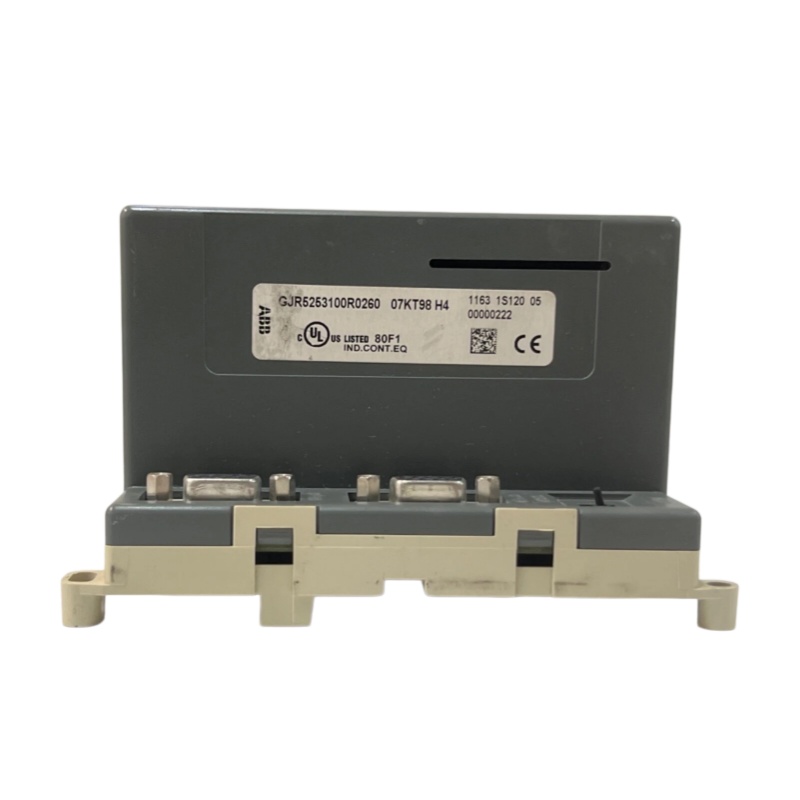
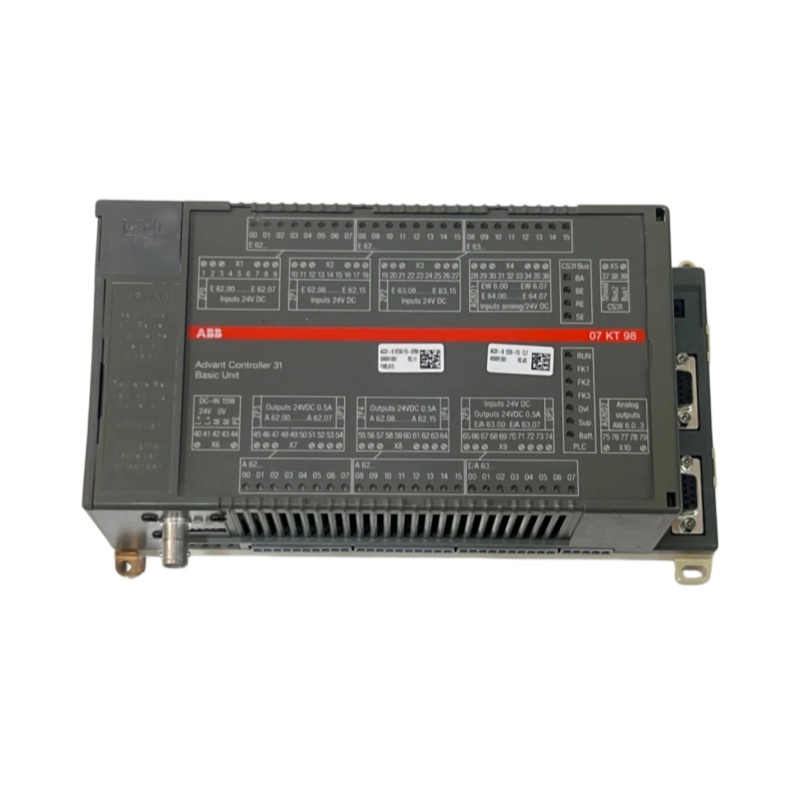
ABB 07KT98 H4 Automation Control Module
ABB 07KT98 H4
1. Product Overview
2. Product Parameters
|
Parameter Item
|
Specification
|
|---|---|
|
Operating Voltage
|
24V DC
|
|
Input Voltage
|
12-30 V DC
|
|
Input Signal
|
8 analog channels, 24 digital inputs (24V DC)
|
|
Output Signal
|
4 analog outputs, 16 digital outputs (24V DC)
|
|
Output Current
|
0.5 A
|
|
Output Voltage (Uout)
|
24 V DC
|
|
Communication Interface
|
Ethernet TCP/IP, RS232, RS485
|
|
Analog Input Type
|
0…+5V, -5…+5V, 0…+10V, -10…+10V, 4…20mA, PT100, etc.
|
|
Analog Output Type
|
-10…+10V, 0…20mA
|
|
Operating Temperature
|
0…+55°C (Operating), -40°C to +70°C
|
|
Storage Temperature
|
-25…+75°C
|
|
Humidity
|
5% to 95% (Non-condensing)
|
|
Dimensions
|
85mm×260mm×160mm
|
|
Weight
|
Approx. 1.1kg-2.35kg
|
|
Ingress Protection Rating
|
IP54
|
3. Product Features
- 10/100 Mbps RJ45 Ethernet interface
- 100 Mbps MTRJ fiber Ethernet interface
- RS232/RS485 serial ports (supports Modbus master and slave protocols)
- CAN communication interface
4. Structure and Composition
4.1 Hardware Structure
- CPU Module: Serves as the core of the embedded controller to undertake core operation and control tasks
- I/O Channels: Includes digital input/output channels and analog input/output channels for signal collection and output control
- Power Interface: 24V DC power input port for stable power supply of the device
- Communication Interface: Integrates Ethernet ports, serial ports and CAN bus interfaces for multi-mode data transmission
- Display and Indication: Equipped with LED status indicator lights to intuitively display device operating status
4.2 Software Functions
- The embedded programming environment fully complies with the IEC 61131-3 international standard
- Supports enhanced DNP3 protocol for efficient data communication
- Provides complete communication network functions and redundant backup functions to ensure system stability
- Supports scalable configuration, with up to 192 communication ports and 1024 I/O points available
5. Application Fields
|
Application Field
|
Specific Application Scenarios
|
|---|---|
|
Industrial Automation
|
Production line control, robot control, mechanical automation
|
|
Power Industry
|
Power distribution systems, power plants, substations
|
|
Building Automation
|
Commercial buildings, data centers
|
|
Transportation Industry
|
Traffic management systems, railway signal control
|
|
Petrochemical Industry
|
Monitoring of petroleum and natural gas production and operation
|
|
Water Management
|
Water supply and wastewater treatment monitoring
|
|
Manufacturing Industry
|
Discrete manufacturing, process manufacturing, textile machinery, pumps, conveyors
|
|
Public Utilities
|
Hospital operation management, campus facility management, infrastructure operation and maintenance
|
6. Installation and Maintenance
6.1 Installation Precautions
- Ensure the power supply voltage is stable within the range of 24V DC±10%
- Use qualified shielded cables for analog signal connection to reduce signal interference
- Adopt screw terminals or pluggable terminals for digital I/O connection to ensure firm wiring
6.2 Maintenance Guidelines
- Regular Inspection: Periodically check whether the connecting terminals are loose and whether all communication interfaces work normally, and troubleshoot hidden dangers in a timely manner.
- Environmental Maintenance: Keep the surrounding environment of the equipment clean and tidy to prevent dust accumulation from affecting heat dissipation and circuit performance.
- Software Update: Regularly update the device firmware to fix known system bugs and optimize operating performance.
- Configuration Backup: Regularly back up program configurations of key projects to prevent data loss and ensure rapid system recovery.
- Fault Diagnosis: Judge the equipment operating status and locate faults quickly through LED indicator status and professional communication diagnosis tools.
If you would like to learn more about our products and services, please feel free to contact us at any time!
- Sales Manager : Jinny
- Email : sales5@xrjdcs.com
- Whatsapp/Mobile:+86 15359273791
Global renowned brand cooperation
ABB 丨 GE 丨Allen Bradley 丨 Honeywell 丨 Emerson 丨 Bently Nevada 丨 Westinghouse
Triconex 丨 Foxboro 丨 ICS Triplex 丨 Hima 丨 Schneider 丨 Yokogawa 丨 Woodward
—————————————————————————————
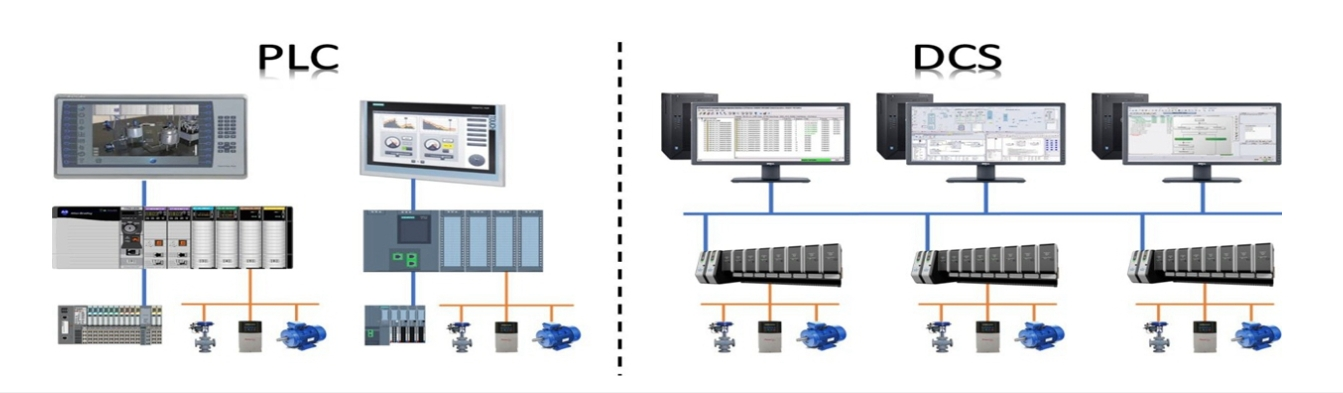
Main brand ABB GE、 Emerson、Foxboro、Triconex、Ovation、Motorola、Xycom、Allen-Bradley、Bently-nevada、Honeywell、 Schneider、Fanuc、Yokogawa、Woodward…
Wide first-hand channels and abundant inventory! Fast delivery, reliable quality, and competitive price.
model:
★ ABB (AC800M/AC800F/AC800PEC/AC900F/excitation control)
★ GE VMIVME/VMIC series CPU motherboard
Relay protection device SR469/SR369/SR489/SR750
IS200/IS215/IS220/ IS420/ DS200/DS215
/IC693/IC694/IC695/IC697/IC698
★ Envision (3008, 3625, 3508E. 3721, 3700A 4351B security system module)
★ Bentley (3500/42M, 3500/22M, 3500/95.3500/05)
Woodward 9907 series 505 speed regulator, 8840 series controller, module
★ Foxboro (FBM230, FBM232, FCP270, H90/H92)
★ Emerson Westinghouse module 1C311/1C312, DELTAV module EPRO sensor
★ Black Horse (F3330, F3236, F6217, F7126, F8621A)
★ Schneider Modicon 140 series CPU, communication module ELAU servo
★ AB: (PLC 1756CPU2094 controller 2711 series touch screen)
★ PROSOFT MVI46/56/69, AB’s communication module