
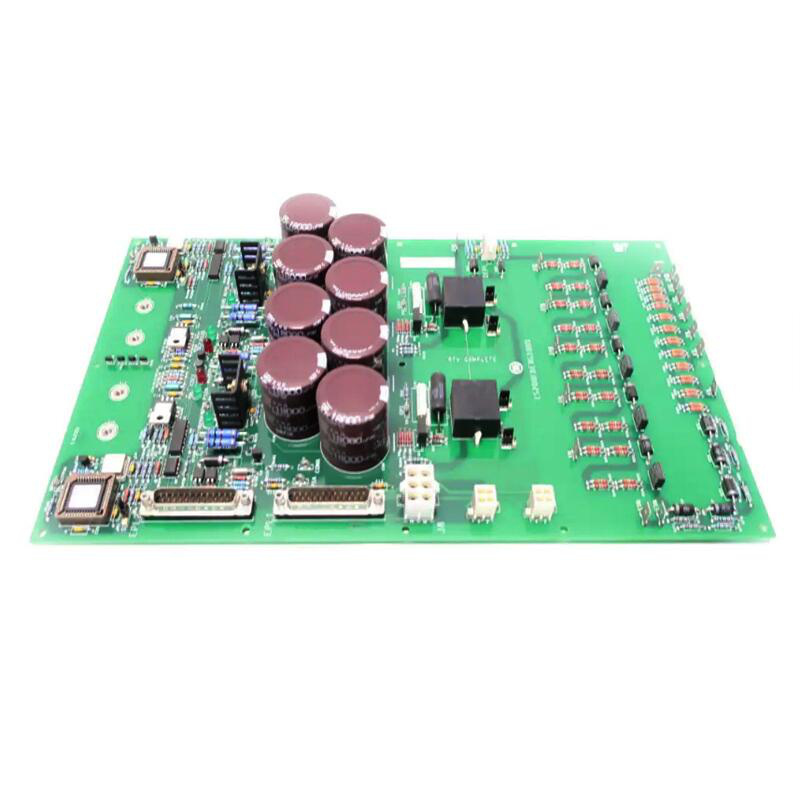
GE IS200EDEXG1B Excitation Control
GE IS200EDEXG1B
1. Product Overview
2. Technical Specifications
|
Parameter Item
|
Specification
|
|---|---|
|
Input Voltage
|
110/220V AC or 100-240V AC
|
|
Output Voltage
|
24V DC (125V DC recorded in partial data)
|
|
Output Current
|
Max. 5A or 10A
|
|
Operating Temperature
|
-10℃ to 50℃ or -40℃ to +85℃
|
|
Storage Temperature
|
-20℃ to 85℃
|
|
Housing Material
|
Aluminum Alloy
|
|
Dimensions
|
150mm × 100mm × 50mm or 120×80×40mm
|
|
Weight
|
0.5kg – 1.2kg
|
|
Ingress Protection Grade
|
IP65
|
|
Connection Type
|
D-Sub Connector
|
3. Product Features
3.1 Core Functions
- De-Excitation Control: Realizes high-precision demagnetization through Silicon Controlled Rectifier (SCR) to ensure safe shutdown of excitation equipment.
- Conduction Induction Feedback: Equipped with Hall-effect conduction sensors to accurately detect the magnetic field generated by thyristor current, realizing real-time operating status monitoring.
- Voltage Holding Function: Maintains normal equipment operation temporarily in case of power failure, avoiding sudden shutdown failures.
- Overcurrent Protection: Integrates overload, overvoltage and short-circuit protection mechanisms to effectively protect the module and the whole system.
- Excitation Trigger Control: Supports SCR de-excitation ignition control to ensure stable switching of the excitation system.
3.2 Product Advantages
- High Reliability: Adopts industrial-grade electronic components, which can adapt to harsh and complex power operation environments.
- Easy Maintenance: Modular integrated design simplifies on-site installation, disassembly and daily maintenance procedures.
- Durable Structure: Premium aluminum alloy housing provides excellent anti-corrosion and anti-collision performance for harsh working conditions.
- Intelligent Operation: Built-in automatic adjustment and monitoring modules to realize intelligent operation of the excitation system.
- Alarm Reminder Function: Equipped with sound alarm device, which can promptly remind operators of system abnormal faults.
4. Structure and Composition
4.1 Internal Structure
- Hall-effect conduction sensor
- SCR (Silicon Controlled Rectifier) assembly
- Voltage holding circuit
- Overcurrent protection device
- D-Sub connector interface
4.2 System Matching Components
- EXTB Board: Specialized for controlling the operating status of the EDEX module.
- ESPM Module: Provides 24VDC power input and realizes conversion to 125VDC output.
- EMIO Board: Essential matching board for system linkage operation.
5. Application Fields
5.1 Power Generation Industry
5.2 Other Industrial Fields
6. Installation and Maintenance
6.1 Installation Precautions
- Ensure the installation environment meets the standard operating temperature range of -10℃ to 50℃.
- Verify that the input voltage is consistent with the rated specification (110/220V AC) before installation.
- Use standard D-Sub connectors for wiring and ensure all connections are firm and reliable.
- Arrange the module in a well-ventilated position to avoid long-term operation in high-temperature environments.
6.2 Usage Precautions
- Check whether the output voltage meets the equipment requirements before connecting the load.
- Confirm correct input voltage and error-free wiring to avoid module damage.
- The module does not support DC input and parallel operation is not recommended.
- Cut off the power supply and store the module in a dry environment if it is not in use for a long time.
6.3 Maintenance Key Points
- Regularly inspect the operating status of the module to ensure stable system operation.
- Keep the housing clean to guarantee good heat dissipation performance.
- Periodically check connectors and wiring terminals for looseness or aging.
- Monitor the operating temperature in real time to ensure it is within the allowable range.
- Trigger alarm processing and shut down the equipment for inspection immediately once abnormal conditions are found.
If you would like to learn more about our products and services, please feel free to contact us at any time!
- Sales Manager : Jinny
- Email : sales5@xrjdcs.com
- Whatsapp/Mobile:+86 15359273791
Global renowned brand cooperation
ABB 丨 GE 丨Allen Bradley 丨 Honeywell 丨 Emerson 丨 Bently Nevada 丨 Westinghouse
Triconex 丨 Foxboro 丨 ICS Triplex 丨 Hima 丨 Schneider 丨 Yokogawa 丨 Woodward
—————————————————————————————
【Reasons to Choose us】
1. Unmatched Quality: Our products are sourced directly from top-tier foreign factories and undergo rigorous testing to ensure exceptional performance.
2. Your Satisfaction Guaranteed: Enjoy peace of mind with our one-year warranty and 15-day return or replacement policy for non-man-made issues.
3. Expert Support: Our 24/7 service hotline provides instant answers to your product questions.
4. Cost-Effective: Direct sourcing from manufacturers means competitive prices and a wide in-stock selection.
5. Fast Delivery: Experience quick shipping times thanks to our efficient supply chain.
————————————————————
【Delivery Time】
1. Express Shipping (DHL, UPS, FedEx, EMS):3-10 working days is a good rule of thumb. These services prioritize speed and often offer features like next-day or guaranteed dezlivery by a certain date (for an additional fee).
2. Air Mail (China Post, Hong Kong Post):7-35 working days, depending on the destination country. This is a more budget-friendly option, but it takes longer because it has lower priority for shipment.
【Important Notes】
Please follow the product’s instruction manual carefully for installation and debugging to avoid damage to the product.