Product Overview
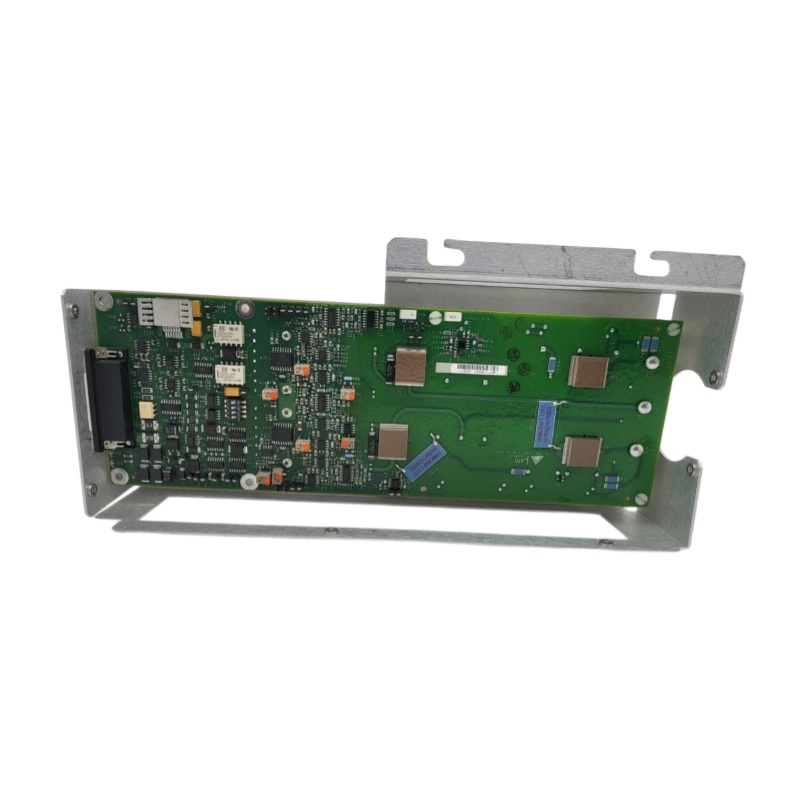
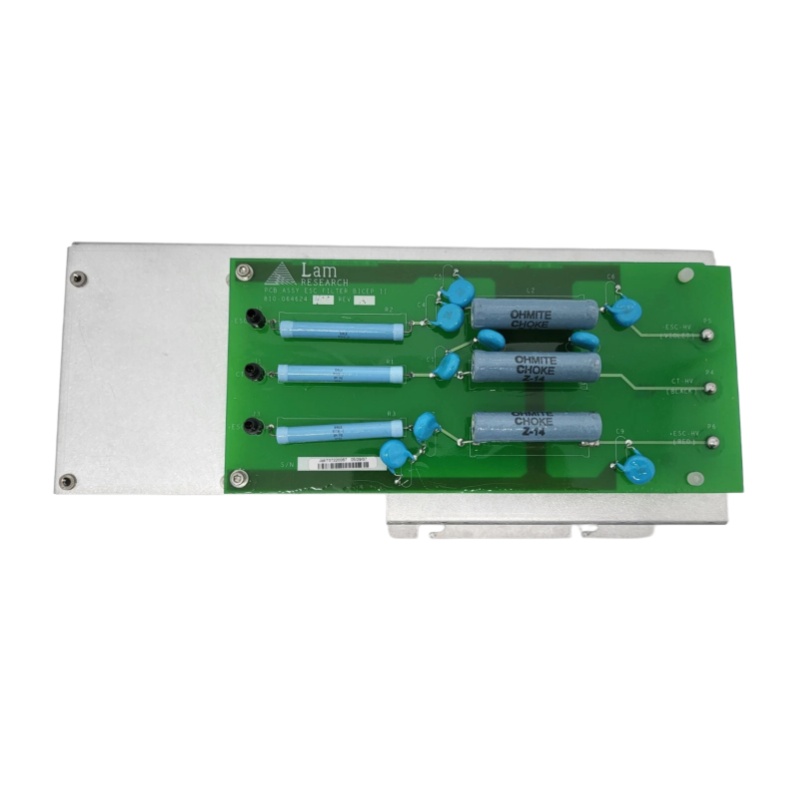
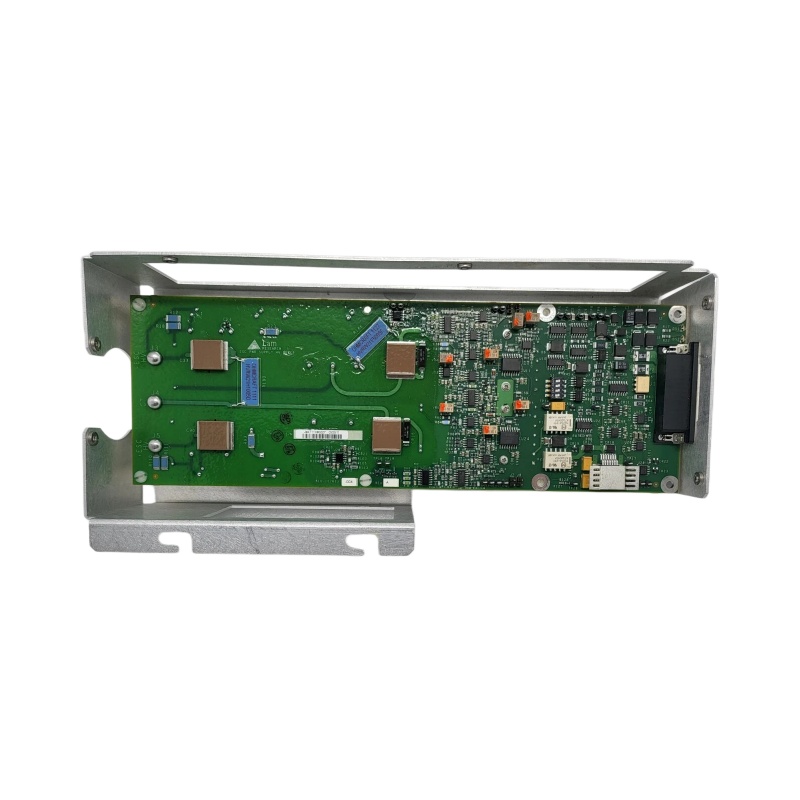
The Lam Research 810-107813-004 is a high-performance Printed Circuit Board Assembly (PCBA) exclusively designed and manufactured by Lam Research for its industry-leading semiconductor plasma etching and deposition equipment. Classified explicitly as an Electrostatic Chuck (ESC) Control PCB, this original 810-series spare part focuses on the precise driving, status monitoring, and protection control of the Electrostatic Chuck, a core component of semiconductor processing equipment.
This control board is also designated as a BIAS LEV (Bias Level) PCB, indicating its critical function of supplying and regulating specific bias voltages for the ESC. This capability is essential for precisely controlling the plasma bombardment energy applied to wafer surfaces during fabrication. As a highly customized original equipment manufacturer (OEM) component, the 810-107813-004 adheres to Lam Research’s most stringent internal standards in design, material selection, and manufacturing. It delivers long-term, stable, and accurate performance under extreme factory operating conditions—including 24/7 continuous high-load operation and intense electromagnetic interference—making it an indispensable component for efficient and stable production of advanced logic and memory chips.
Product Specifications
|
Parameter Name
|
Parameter Value
|
|
Product Model
|
810-107813-004
|
|
Manufacturer
|
Lam Research
|
|
Product Type
|
Electrostatic Chuck (ESC) Control PCB
|
|
Functional Description
|
ESC high-voltage driving, bias level control, real-time status monitoring and protection
|
|
Hardware Version
|
Rev. B and other compatible revisions
|
|
Alternative Name
|
BIAS LEV (Bias Level) PCB
|
|
Compatible Platforms
|
Lam Research semiconductor etching and deposition equipment (e.g., 2300 Series)
|
|
Application Environment
|
Class 1000 or higher cleanroom / Semiconductor Fab environment
|
|
Product Status
|
OEM spare / replacement part
|
Structure and Composition
The Lam Research 810-107813-004 adopts a sophisticated structural design tailored for high-precision high-voltage control systems. It is built on a multi-layer PCB substrate made of high-Tg FR-4 flame-retardant material, which features excellent dimensional stability and electrical insulation under temperature fluctuations, laying a solid foundation for safe high-voltage circuit operation. The board is designed with optimized component layout, divided into three core functional units: the high-voltage driving and power conversion unit, the precision measurement and signal conditioning unit, and the logic control and communication interface unit.
Thehigh-voltage driving and power conversion unit serves as the power core of the board. Equipped with dedicated high-voltage DC-DC converters and high-withstand-voltage power transistor drive circuits, it converts low-voltage logic power supplies (+24VDC, +5VDC) into precisely adjustable high DC voltages (up to hundreds or thousands of volts) to drive ESC electrodes and generate stable wafer clamping force.
The precision measurement and signal conditioning unit functions as the perceptual system of the device. It integrates high-resistance voltage divider networks, precision current-sensing amplifiers, and temperature sensor interface circuits. This unit monitors real-time key parameters including ESC driving voltage, microampere-level leakage current, and base temperature, while amplifying and filtering analog signals to ensure accurate data acquisition.
The logic control and communication interface unit consists of a microcontroller (MCU) and peripheral logic circuits. It enables data interaction with the equipment main controller, receiving operational commands and uploading real-time device status. Additionally, it generates high-precision PWM (Pulse Width Modulation) and DAC (Digital-to-Analog Conversion) signals to regulate the output of the high-voltage driving unit. The highly integrated collaboration of the three units ensures the safe, accurate, and full-process control of ESC operation.
Key Features and Advantages
1. Ultra-High-Precision Closed-Loop Clamping Force Control
Equipped with onboard precision high-voltage drive and microampere-level current detection circuits, the 810-107813-004 realizes fine closed-loop adjustment of wafer clamping force. It dynamically identifies clamping force fluctuations caused by changes in process conditions such as chamber pressure and plasma density, and automatically compensates by adjusting driving voltage. This maintains a completely stable wafer clamping state throughout all process cycles, effectively preventing wafer offset and jumping. The precise control capability is critical for ensuring etching uniformity and improving device yield, especially for advanced manufacturing processes of 7nm and below.
2. Comprehensive Safety Protection and Fault Diagnosis
This control board integrates multiple hardware-level safety protection mechanisms. In case of abnormal ESC leakage current (indicating potential arcing or dielectric breakdown), driving voltage overload, or overtemperature faults, the protection circuit cuts off high-voltage output within microseconds and triggers an alarm to the main controller. This timely protection prevents damage to expensive ESC ceramic substrates, avoids severe equipment failures, and eliminates production downtime losses.
3. Modular Design for Rapid Fault Isolation and Maintenance
As an independent replaceable module in the ESC subsystem, the 810-107813-004 greatly simplifies equipment maintenance. For ESC-related faults including wafer clamping failure, excessive leakage current, and unstable bias level, engineers can quickly locate and isolate faults with this board as a key test point. Standard modular replacement reduces the Mean Time To Repair (MTTR) from several hours to minutes, significantly improving the overall equipment effectiveness (OEE) of semiconductor production lines.
Application Fields
The Lam Research 810-107813-004 is exclusively applied to core semiconductor manufacturing processes, including plasma etching and Plasma-Enhanced Chemical Vapor Deposition (PECVD). It is widely integrated into Lam Research mainstream processing platforms, such as the 2300®, Kiyo®, and Versys® series etching and deposition equipment, for the production of logic chips (CPU, GPU), memory chips (DRAM, 3D NAND flash), power devices, and MEMS components.
Its core application scenarios cover two key dimensions. First, as the central control unit of the ESC subsystem, it executes precise wafer chucking and de-chucking timing sequences in every process cycle, and maintains stable bias levels during critical etching steps to regulate ion bombardment energy and achieve accurate etching morphology and depth. Second, it serves as a core data source for process diagnosis. The real-time leakage current and temperature data collected by its onboard measurement circuits not only supports instantaneous equipment protection but also is recorded by the equipment log system. Process engineers can analyze ESC health trends based on the data to formulate scientific preventive maintenance (PM) plans. In summary, a fully functional 810-107813-004 is the foundational hardware for ensuring plasma process stability, repeatability, and high wafer yield.
Related Products
- Lam Research 810-495659-308: A complementary ESC power supply and control PCBA (Bicep II DC-Probe), compatible with different generations or models of ESC systems and functionally supplementary to the 810-107813-004.
- Lam Research 810-006490-006: A key PCBA (Bicep) in the ESC drive subsystem, responsible for signal filtering, driving and detection, with similar functional positioning to the target model.
- Lam Research 810-341681-102: An RF sensor board installed inside equipment matchers, belonging to a different functional subsystem from the ESC control board.
- Lam Research 810-800256-004 / 005: 810-series node boards, core components of the equipment control system that work in coordination with the ESC control board.
- Lam Research 707103-001: An I/O bus control board that manages internal equipment data communication, part of the high-value core spare part system matching the 810-107813-004.
Installation and Maintenance
Pre-Installation Preparation
Installation of the 810-107813-004 must be performed by Lam Research certified professional technicians in a Class 1000 or higher controlled cleanroom environment. Due to the high-voltage circuit design, strictly cut off the main equipment power and complete the Lockout/Tagout (LOTO) procedure before operation. Fully discharge all energy storage components of the ESC to confirm complete high-voltage release. Operators must wear full cleanroom garments and complete ESD protection equipment, including ESD wristbands and grounding wires.
The board connects to the equipment chassis and wiring harness via onboard connectors. During installation, carefully align connector pins and guide grooves, and insert the board steadily with uniform force to ensure complete mechanical engagement and firm fixation. Connect all related flat cables and coaxial wires correctly with verified polarity. Avoid touching high-voltage components and golden fingers on the board at all times to prevent electrostatic damage and surface contamination.
Maintenance Guidelines
Daily maintenance of the 810-107813-004 focuses on equipment log monitoring and regular preventive inspections. During routine maintenance, visually inspect the board surface and peripheral connectors for dust accumulation, corrosion, discoloration, or burn marks, and confirm all high-voltage connection points are tightly fastened and well-insulated.
In daily operation, if the equipment generates faults such as wafer clamping failure, excessive leakage current, unstable bias level, and other ESC-related alarms, the 810-107813-004 shall be prioritized for troubleshooting. Its modular design supports rapid replacement. After installing a new board, run the official ESC diagnostic test program and complete full ESC calibration in accordance with the equipment manual. This ensures the board parameters match the physical characteristics of the ESC and actuator, restoring the equipment to optimal process performance.