Product Overview
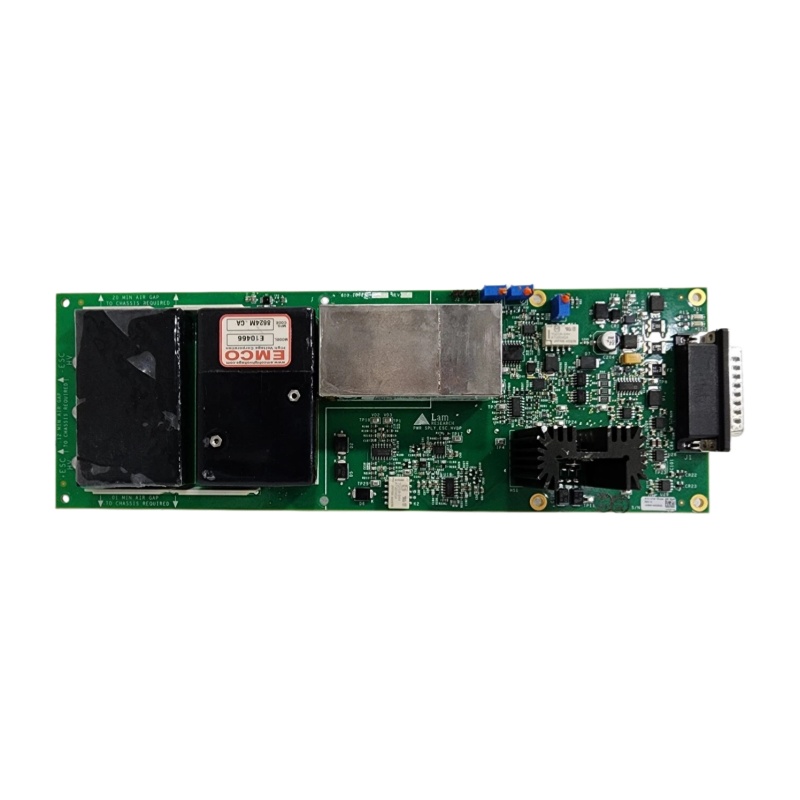
The Lam Research 810-107813R206 is an ultra-high-purity digital Mass Flow Controller (MFC) integrated module designed for the front-end process gas delivery system of semiconductor plasma etching and deposition equipment. As a core metering and execution component in Lam Research gas panels, it undertakes the critical task of delivering various corrosive and inert special process gases to the reaction chamber with ultra-high precision and ultra-fast response speed.
Distinct from standard industrial-grade MFCs, this module features an ultra-clean Electropolished (EP) internal flow channel. Its sensing element adopts an advanced thermal or pressure-based frictionless suspension design, integrated with precision laminar flow elements and adiabatic coils. This enables accurate mass flow measurement and fundamentally eliminates the impact of inlet temperature and pressure fluctuations on measurement accuracy.
In ultra-high aspect ratio etching for 3D NAND devices and atomic-level precision etching for advanced logic chips, the flow control stability of this component directly determines the chemical reaction rate on the wafer surface, etching selectivity, and ultra-fine control of Critical Dimensions (CDs).
This model belongs to Lam Research’s highly customized spare part system. The R206 suffix indicates a version with fixed parameters following specific Engineering Change Orders (ECO) or tailored for specific customer equipment batches.
The Lam Research 810-107813R206 adopts a special alloy valve body resistant to halogen gas corrosion and an all-metal sealing structure, equipped with a specially calibrated high-speed Digital Signal Processor (DSP). Differing from standard versions (e.g., -107), it features optimized communication protocol stacks, PID control algorithm parameters, and flow nonlinear compensation curves to meet the unique flow
Product Parameters
|
Parameter Name
|
Parameter Value
|
|
Product Model
|
Lam Research 810-107813R206
|
|
Manufacturer
|
Lam Research
|
|
Product Type
|
Ultra-high-purity digital Mass Flow Controller (MFC) module (custom specific version)
|
|
Typical Flow Range
|
10 SCCM ~ 50 SLM (configuration-dependent; R206 version is optimized for specific flow ranges)
|
|
Control Accuracy
|
±0.5% of setpoint (10% ~ 100% full scale)
|
|
Repeatability
|
±0.2% full scale
|
|
Response Time (Setpoint)
|
< 800 ms (within ±2% of final value; optimized response curve for R206)
|
|
Applicable Gas Types
|
Corrosive gases (Cl₂, BCl₃, HBr, CF₄, NF₃, etc.) and inert gases
|
|
Valve Body Material
|
Corrosion-resistant stainless steel (316L VAR or Hastelloy C-22)
|
|
Sealing Material
|
All-metal (metal gasket) or high-durability FFKM (Perfluoroelastomer)
|
|
Maximum Inlet Pressure
|
150 psig (approx. 10.3 bar)
|
|
Pressure Drop Range
|
10 ~ 60 psid (depends on specific setpoints)
|
|
Internal Leak Rate
|
< 1.0 × 10⁻⁹ atm·cc/sec (He)
|
|
External Leak Rate
|
< 1.0 × 10⁻¹⁰ atm·cc/sec (He)
|
|
Operating Temperature Range
|
15°C ~ 50°C (valve body can be heated up to 120°C to prevent condensation)
|
|
Communication Protocol
|
DeviceNet™ or RS-485 (R206 version with fixed specific node addresses and communication parameters)
|
|
Firmware Version
|
R206-specific fixed version (with customized linearization calibration coefficients)
|
|
Cleanliness Grade
|
Class 1 assembly environment, double-layer vacuum sealed packaging
|
|
Power Supply Voltage
|
24 VDC ± 10%
|
Structure and Composition
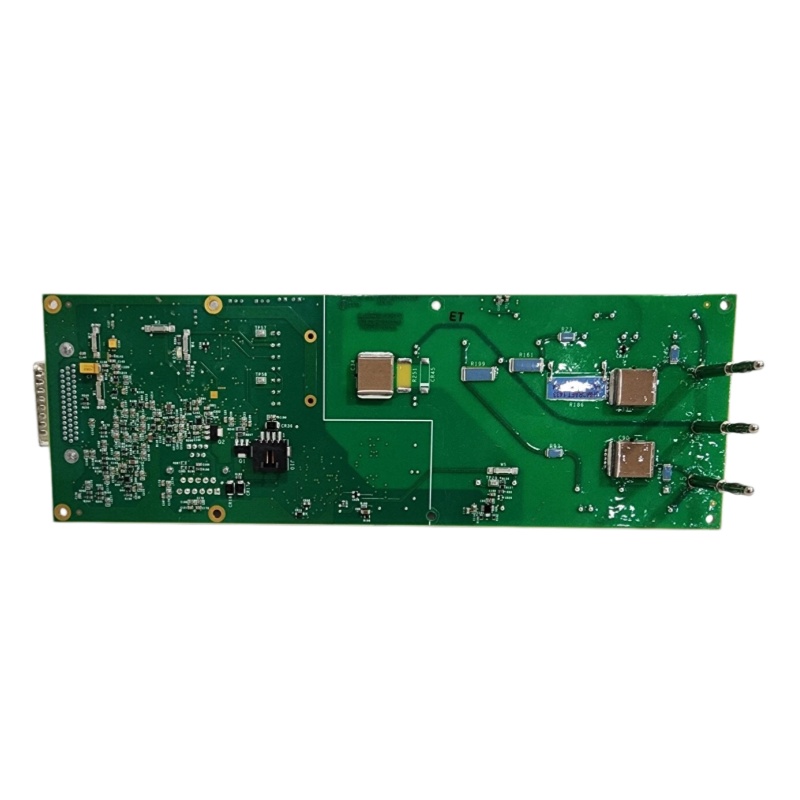
The Lam Research 810-107813R206 shares the same inherent physical structure as the standard 810-107813-107 model, built on Lam Research’s mature MFC hardware platform. Physically, the module is divided into three core functional areas: flow and sensing area, control valve actuation area, and signal processing and communication area.
The flow and sensing area serves as the pneumatic core of the module, constructed from ultra-precision machined special alloy metal. It integrates bypass capillary tubes and spiral/straight sensing tubes, calculating real-time mass flow via thermal sensing principles. Its optimized flow channel design delivers an extremely small dead volume, enabling rapid process gas replacement.
The control valve actuation area integrates a high-dynamic-response electromagnetic proportional regulating valve. The valve core undergoes specialized wear and corrosion resistance treatment to ensure repeat positioning accuracy after millions of actuation cycles.
The signal processing and communication area is the key differentiator between the R206 version and standard models. The Microcontroller Unit (MCU) on its PCB is flashed with R206-customized firmware, including factory-preset PID control parameters, gas type conversion K-factors, and nonlinear compensation algorithms tailored for specific equipment and process requirements. Additionally, its communication interface circuit is adaptively adjusted, with preset MAC IDs or baud rates for DeviceNet networks, enabling plug-and-play seamless integration with matched system configurations.
Key Features and Advantages
1. Version-Locked Precision Matching
The core advantage of the Lam Research 810-107813R206 lies in its role as a version-locked spare part. Its firmware parameters and calibration coefficients are pre-configured for specific batches of Lam equipment and customer process recipes. During fab maintenance replacement, no on-site parameter initialization or gas recalibration is required, drastically shortening equipment recovery time for PM operations. It also completely eliminates process deviation risks caused by manual configuration errors.
2. Ultra-High Precision and Ultra-Fast Dynamic Response
Adopting advanced thermal sensing technology and optimized digital closed-loop algorithms consistent with standard models, this version delivers high-precision setpoint control across the full scale. Its ultra-short step response time perfectly matches the flow pulsation requirements of modern pulsed plasma processes. The built-in inlet pressure fluctuation pre-compensation function isolates upstream gas source disturbances from the downstream process chamber, significantly improving the transient stability of critical process steps.
3. Extreme Corrosion Resistance and Cleanliness Assurance
Optimized for strongly corrosive gases widely used in semiconductor processes, the module adopts a high-nickel alloy valve body and all-metal sealing solution. Its internally electropolished flow channel achieves a mirror-level surface roughness. This effectively prevents gas molecule adsorption and particle retention on channel walls, minimizes cross-contamination during gas switching, and fully complies with the semiconductor industry’s most stringent cleanliness control standards.
Application Fields
The Lam Research 810-107813R206 is mainly integrated into advanced 200mm and 300mm wafer fabrication equipment, deployed in the gas box distribution systems of Lam Research 2300 series tools (including Kiyo series dielectric etchers and Flex series conductor etchers) for process gas pipelines requiring high-precision flow control and dynamic response.
Its typical applications cover critical etching processes in logic chip manufacturing, such as precise Cl₂/HBr gas ratio control for polysilicon gate etching (the R206 version is specially optimized for HBr gas response curves), and stepped precursor flow switching for ultra-high aspect ratio etching in 3D NAND memory chips.
In broader semiconductor R&D and mass production scenarios, this version is ideal for fully validated high-volume production tools with strict hardware consistency requirements. It eliminates the massive process matching test workload caused by standard MFC replacements, reducing time costs effectively. It is the preferred spare part for fab equipment engineers pursuing extreme process stability and minimum Mean Time To Repair (MTTR) in standardized hardware management.
Installation and Maintenance
Pre-Installation Preparation
Before installing the Lam Research 810-107813R206, completely cut off the upstream gas supply of the gas panel and purge residual process gases in pipelines to a safe concentration with nitrogen. Operators must wear Class 1 cleanroom protective equipment.
Purge pipeline interfaces with high-purity nitrogen and confirm the integrity of the protective film on the new module’s flow ports. Tighten VCR fittings crosswise with a dedicated torque wrench following standard specifications.
For electrical connection, verify stable 24VDC power supply. Confirm that the R206 communication node address is fully consistent with the original equipment configuration; adjust parameters via professional configuration tools if mismatched to match the system topology.
Maintenance Recommendations
Incorporate the 810-107813R206 into regular PM cycle management. Periodically monitor valve opening percentage and tracking error via equipment self-diagnosis interfaces. Due to the fixed firmware of the R206 version, replace the module directly instead of conducting on-site calibration if zero drift or full-scale deviation exceeds specification limits.
Monitor the dynamic tracking deviation between actual flow and setpoints during daily inspections; abnormal deviation growth indicates potential valve core wear or sensor aging. During replacement, replace the upstream filter and all metal gaskets simultaneously. Conduct low-flow nitrogen leak testing after installation, and resume process gas supply only after qualified airtightness verification.