Welcome to our websites!

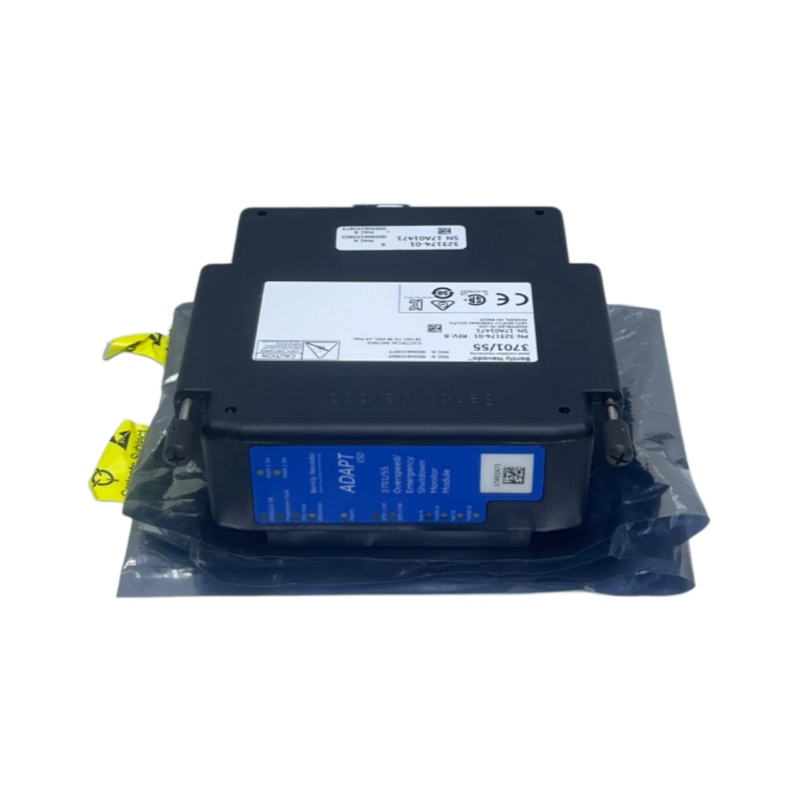
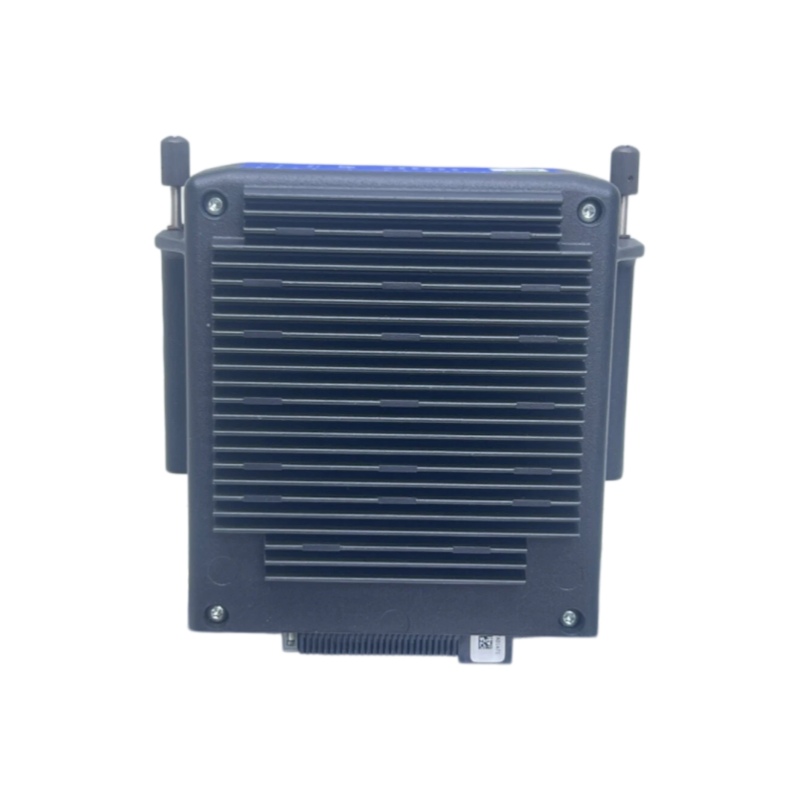
BENTLY NEVADA 3701-55 Safety Module
BENTLY NEVADA 3701-55
1. Product Overview
The Bently Nevada 3701-55 is a core safety module manufactured by Bently Nevada, a world-renowned industrial equipment monitoring brand. It is specially designed to protect critical rotating machinery – including turbines, compressors, pumps and other key equipment – from catastrophic damage caused by overspeed or mechanical failure. This module is commonly integrated into the Bently Nevada ADAPT system, acting as a reliable safeguard to ensure the safe and stable operation of core industrial equipment.
______________________________________________________________________________________________
2. Key Parameters and Specifications
Model: 3701/55
Physical Dimensions: Approx. 100mm × 100mm × 50mm
Weight: Approx. 0.5kg to 1.5kg
Operating Temperature: -25℃ to +70℃ (suitable for standard industrial environments)
Protection Rating: IP20 (for cabinet installation) or IP67 (dustproof and waterproof)
Power Supply: 24V DC
Communication Interface: Equipped with M12 connectors as standard; compatible with common industrial protocols including PROFIBUS DP, Modbus RTU and Modbus TCP
______________________________________________________________________________________________
3. Product Features
Non-Contact Monitoring: Adopts advanced magnetic sensing technology, eliminating physical wear and tear between components. This design guarantees long-term, high-precision equipment monitoring without signal drift or performance degradation.
Triple Modular Redundancy (TMR) Architecture: Built with a highly reliable redundant structure, enabling the module to maintain full normal operation even in the event of a single-point failure. It greatly improves system stability and reduces downtime risks.
Ultra-Fast Response: Features an extremely short response time (typically less than 10 milliseconds), allowing the module to send an immediate shutdown command as soon as overspeed or abnormal operating conditions are detected, preventing equipment damage and safety accidents.
Modular Design: Compact in size and lightweight, the module is easy to install and integrate into existing control cabinets, equipment systems or automation platforms without major retrofitting.
______________________________________________________________________________________________
4. Structure and Components
Sensor Input Terminal: Connects to sensors mounted on the mechanical shaft, collecting real-time rotational speed and vibration data for accurate condition monitoring.
CPU Processing Unit: Integrated with a high-performance 100MHz processor, responsible for real-time data calculation, fault judgment and safety decision-making.
Relay Output Module: Sends control signals to physical circuit breakers, actuators and other external execution components to trigger emergency shutdown or protection actions.
Interface and Expansion Slots: Used for power connection, communication module docking and additional I/O expansion, supporting flexible system configuration and upgrade.
______________________________________________________________________________________________
5. Typical Applications
Energy Industry: Overspeed protection for gas turbines, steam turbines and hydraulic turbines.
Oil and Gas Industry: Safety monitoring and fault protection for pumping units and compressor units.
Chemical and Metallurgical Industry: Emergency shutdown protection for large-scale pumps and fans.
Power Industry: Safety interlock for generator sets and transformer cooling systems.
______________________________________________________________________________________________
6. Installation and Maintenance
Installation Instructions
- Installation must be carried out when the equipment is fully shut down and powered off, to avoid misoperation, short circuit or electric shock hazards.
- Operators must wear anti-static wrist straps to prevent static electricity from damaging the internal circuits and electronic components of the module.
- Ensure that sensor signal wires are connected correctly and firmly, avoiding loose wiring or poor contact that may cause signal failure.
Maintenance Guidelines
- Inspect signal cables and wiring terminals regularly to check for looseness, corrosion or damage, and repair or replace damaged parts promptly.
- Conduct regular system function tests to verify that the module can trigger protection actions normally under fault conditions, ensuring reliable performance.
- Keep track of firmware and software versions; perform upgrades when necessary to adapt to new equipment, optimize functions and improve compatibility.
————————————————————————————————————-
If you would like to learn more about our products and services, please feel free to contact us at any time!
- Sales Manager : Jinny
- Email : sales5@xrjdcs.com
- Whatsapp/Mobile:+86 15359273791
Global renowned brand cooperation
ABB 丨 GE 丨Allen Bradley 丨 Honeywell 丨 Emerson 丨 Bently Nevada 丨 Westinghouse
Triconex 丨 Foxboro 丨 ICS Triplex 丨 Hima 丨 Schneider 丨 Yokogawa 丨 Woodward
—————————————————————————————
Company Introduction
With 20 years of professional experience in large-scale imported systems, our company is engaged in the sales of spare parts for distributed control systems (DCS), programmable logic controllers (PLC), MOTOROLA MVME industrial modules, industrial control communication converters (Anybus), remote input/output modules (RTU), industrial personal computers (IPC), industrial low-frequency screens (IPC), human-machine interface SCSI (50, 68, 80 Pin), AnyBus (Gateway), redundant fault-tolerant control systems, and robot systems.
____________________________________________________________________________________________________________________
Our Advantages
Rich Product Line
We have a complete range of industrial control system equipment, which can meet the various needs of customers in different fields. Whether it is PLC, inverter, sensor, or other automatic control equipment, we can provide professional solutions.
High-Quality Service
We have an experienced team that can provide customers with comprehensive services from product selection, technical support to after-sales service. We always adhere to customer-centricity and create maximum value for customers.
Stable Supply Chain
We have established long-term and stable cooperative relationships with many world-renowned brands, which can ensure the authenticity and stable supply of products.
Professional Technical Support
Our technical team has rich industry experience and can provide customers with professional technical consulting and solutions.
Write your message here and send it to us