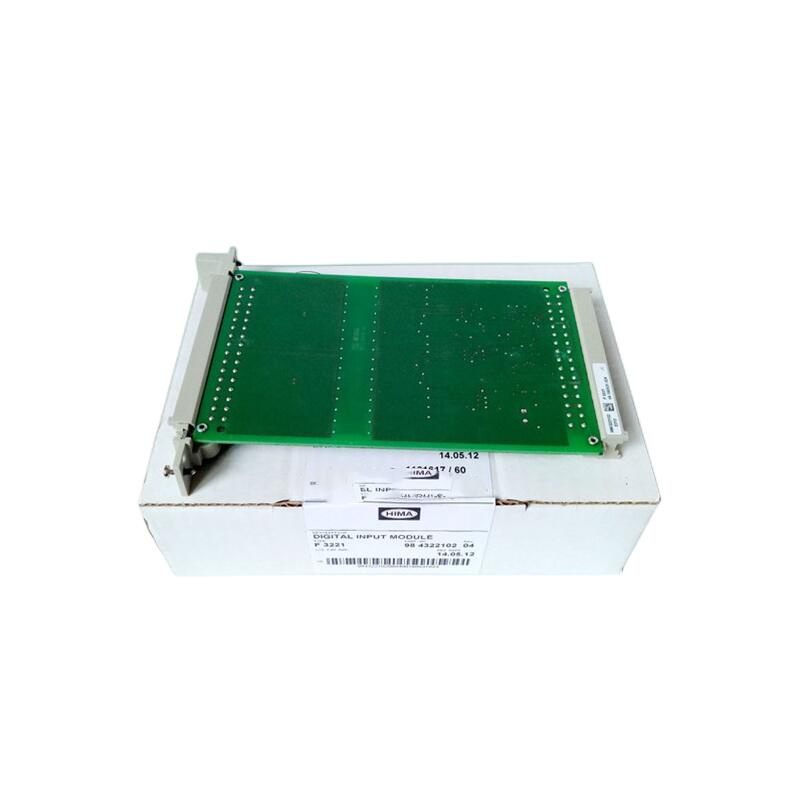
HIMA F8650 Central Processing Unit
HIMA F8650
1. Overview
2. Technical Specifications
Processor & Performance
- CPU Type: Adopts dual-processor redundancy design. Some models (e.g., F8650) use Intel 386EX microprocessors operating in clock synchronization.
- Operating Frequency: Approximately 25 MHz (slight differences between specific models).
- Memory: Equipped with Flash-EPROM (1 MB + 512 KB) and SRAM (256 KB) for program storage and data processing.
________________________________________________________________________________________________________
Interface & Communication
- Display: 4-digit matrix display for showing system status, fault codes, and other information.
- Communication Interface: Mainly communicates via RS485 serial interface.
- Programming Language: Supports IEC 61131-3 standard programming languages (e.g., Ladder Logic, Structured Text).
________________________________________________________________________________________________________
Environmental Adaptability
- Temperature Range: Operating temperature typically -40°C to 70°C; storage temperature -40°C to 85°C.
- Protection Class: IP67.
- Power Supply: 24V DC with redundant power supply design.
________________________________________________________________________________________________________
3. Key Features
4. Structure and Composition
Core Hardware
- Dual CPU Motherboard: Integrates two independent CPU motherboards that are mirror images of each other.
- Memory Modules: Flash-EPROM and SRAM for storing programs and real-time data.
Peripheral Components
- Communication Card: Responsible for data exchange with upper computers or other controllers.
- Display Panel: User interface for showing real-time status.
- Power Supply Module: Provides stable 24V DC power input with redundant design.
________________________________________________________________________________________________________
5. Applications
- Chemical & Oil & Gas: Serves as the core control unit for Emergency Shutdown Systems (ESD) or Fire & Gas Detection Systems (F&G).
- Energy & Power Generation: Used in Safety Instrumented Systems (SIS) of nuclear power plants or thermal power plants, such as High Integrity Pressure Protection Systems (HIPPS).
- Transportation: Applied in the safety layer of rail transit signal systems or train control systems.
- Process Industry: Burner Management Systems (BMS), turbine control, etc.
________________________________________________________________________________________________________
6. Installation & Maintenance
Installation Method
- DIN Rail Mounting: The F8650 adopts a standard DIN rail design, facilitating installation and replacement in cabinets.
- Backplane Connection: Connects to I/O modules or power supply modules via a backplane.
Maintenance Requirements
- Regular Inspection: Use the display and remote diagnostic tools to regularly check the system’s health status, focusing on fault indicators and error codes.
- Redundancy Testing: Regular redundancy function tests are required to ensure both channels can work normally.
- Firmware Update: Perform firmware or software upgrades under official guidance to fix known defects or enhance functions.
————————————————————————————————————-
If you would like to learn more about our products and services, please feel free to contact us at any time!
- Sales Manager : Jinny
- Email : sales5@xrjdcs.com
- Whatsapp/Mobile:+86 15359273791
Global renowned brand cooperation
ABB 丨 GE 丨Allen Bradley 丨 Honeywell 丨 Emerson 丨 Bently Nevada 丨 Westinghouse
Triconex 丨 Foxboro 丨 ICS Triplex 丨 Hima 丨 Schneider 丨 Yokogawa 丨 Woodward
—————————————————————————————
Company Advantages – Professional Solutions & High-Quality Products
Professionalism and Experience
Customer-Oriented Service
Product Diversity
Advanced Technology and Equipment
Superior Geographical Location
Good Corporate Reputation